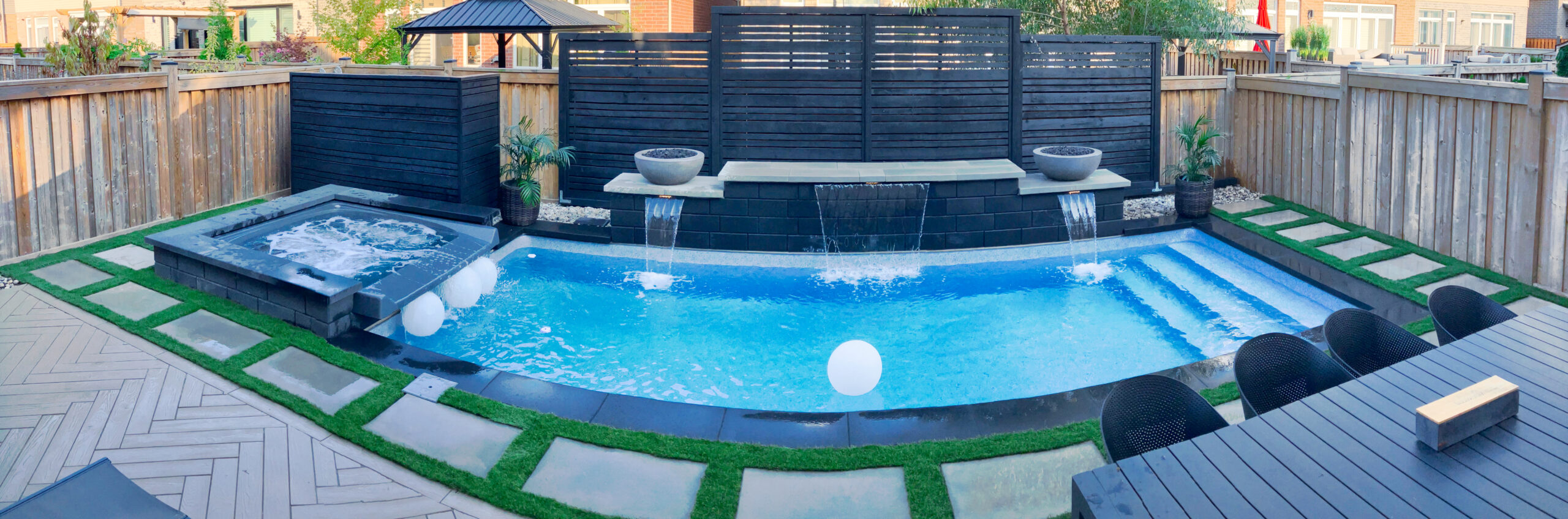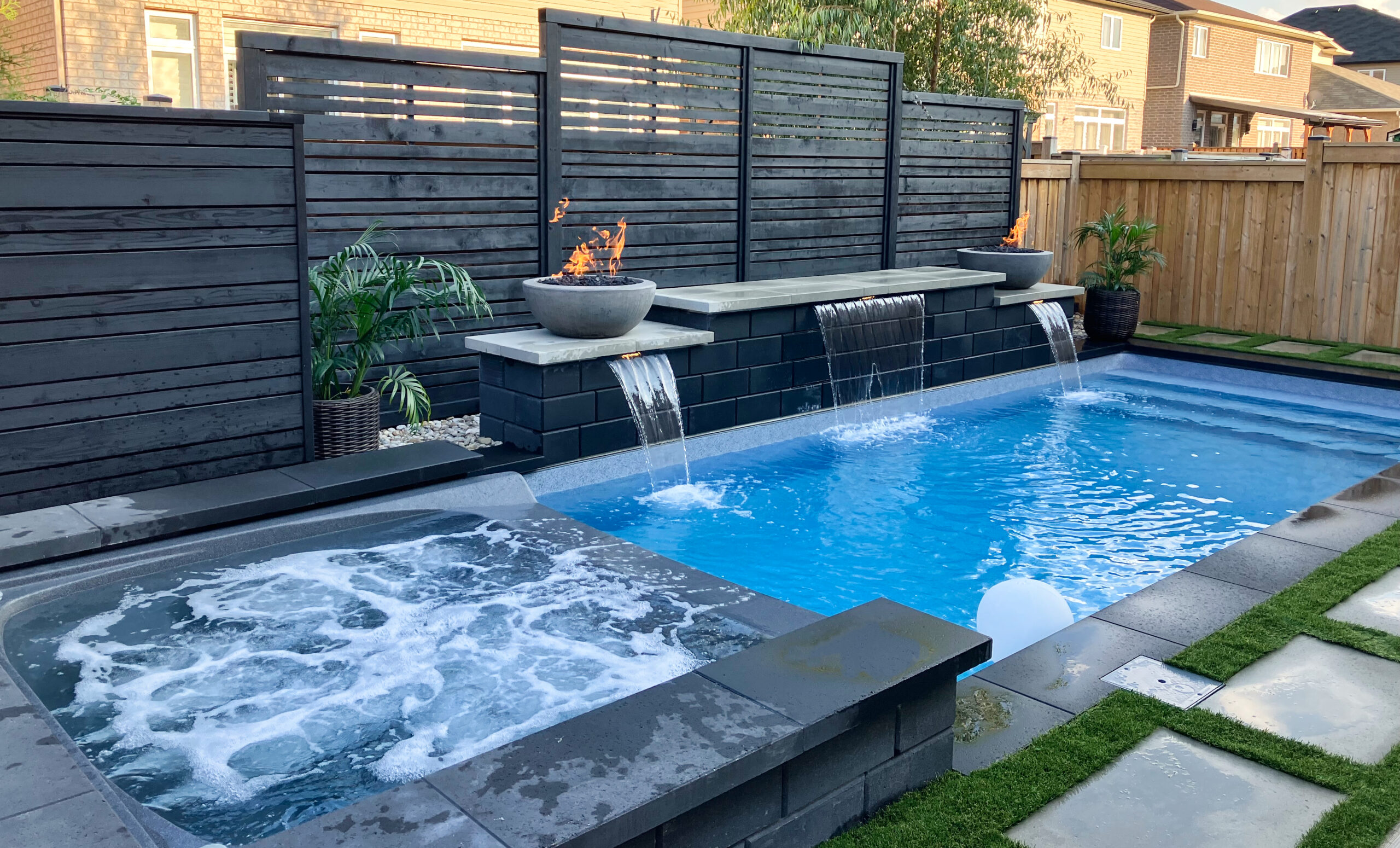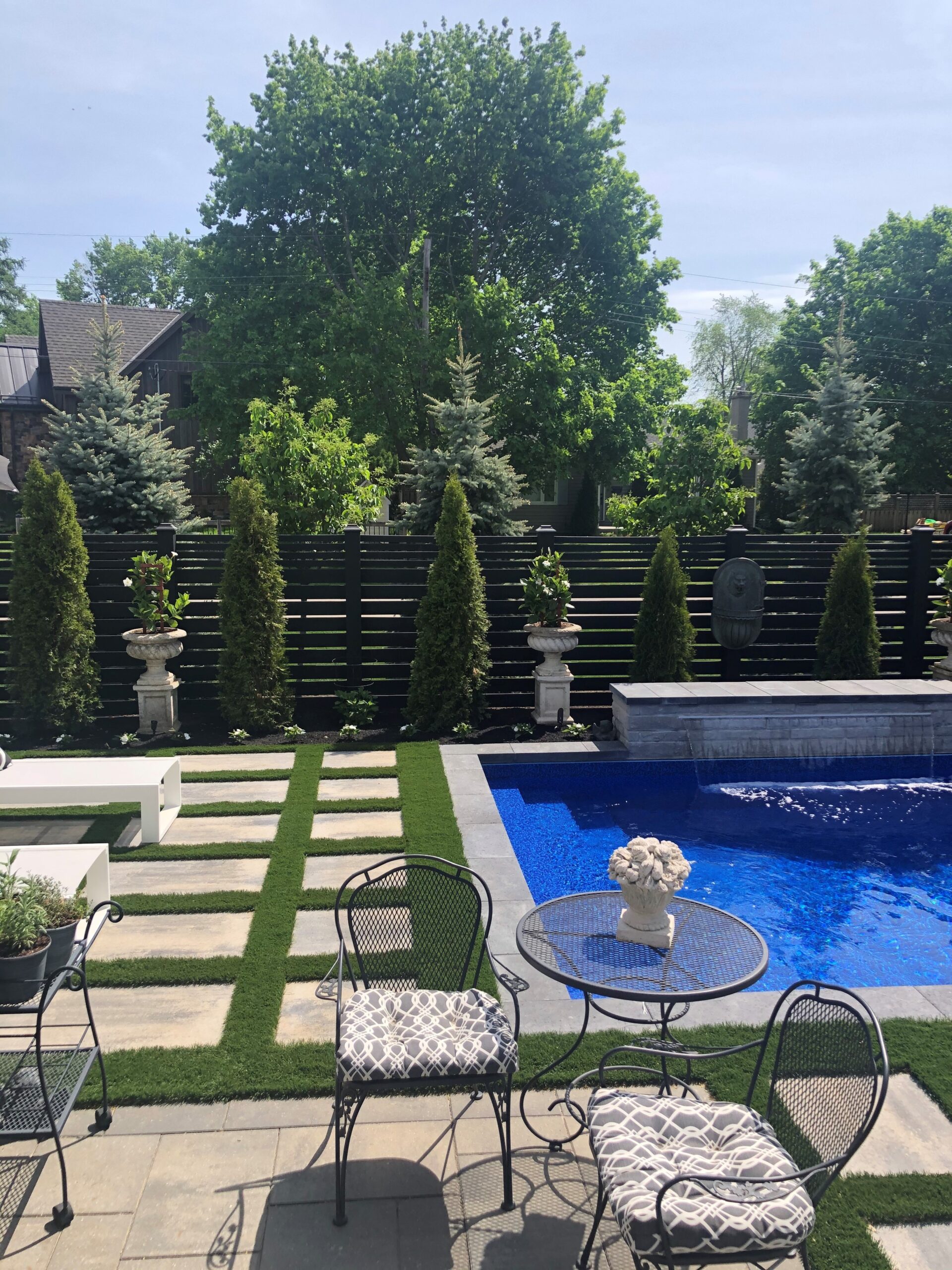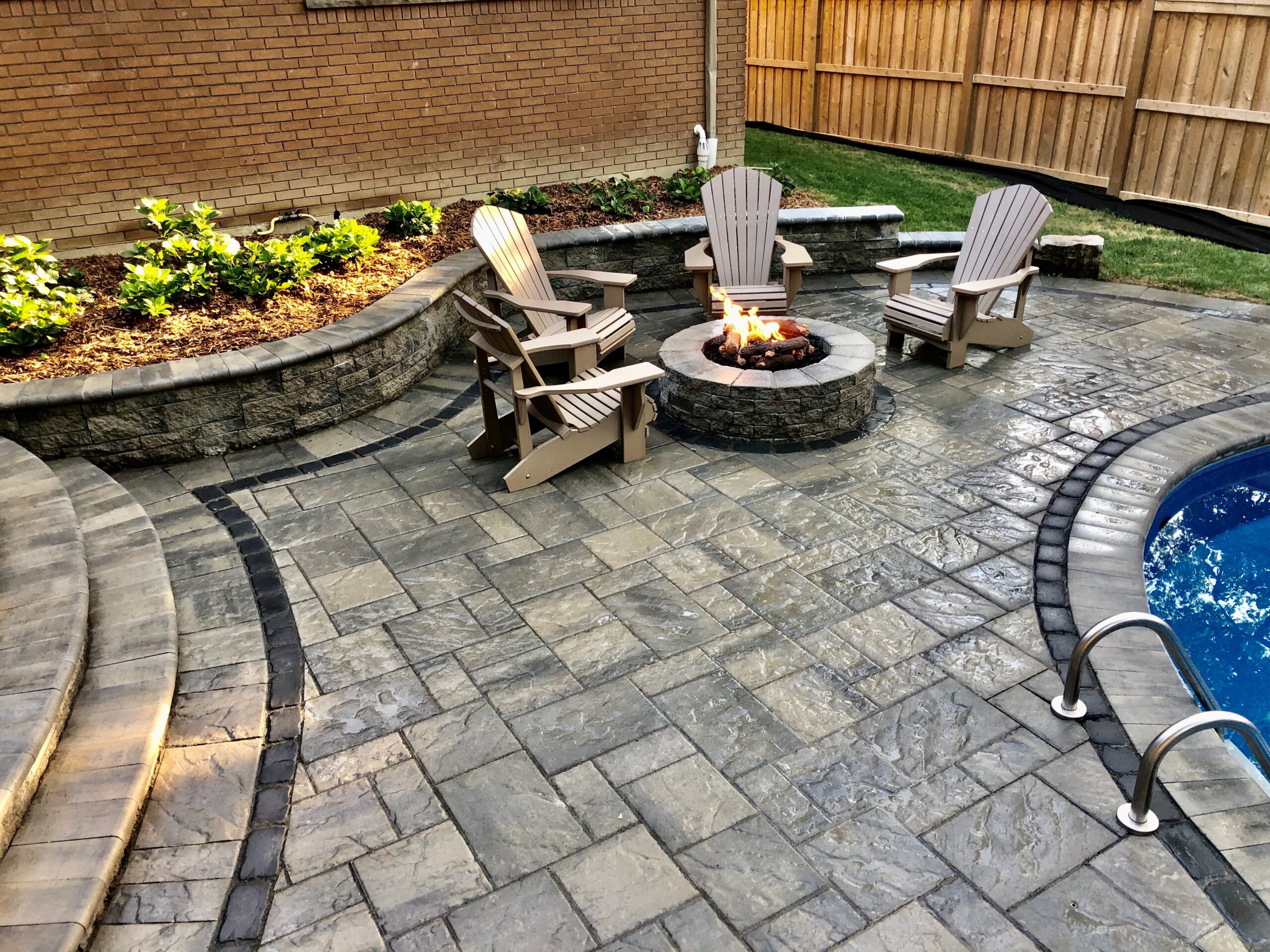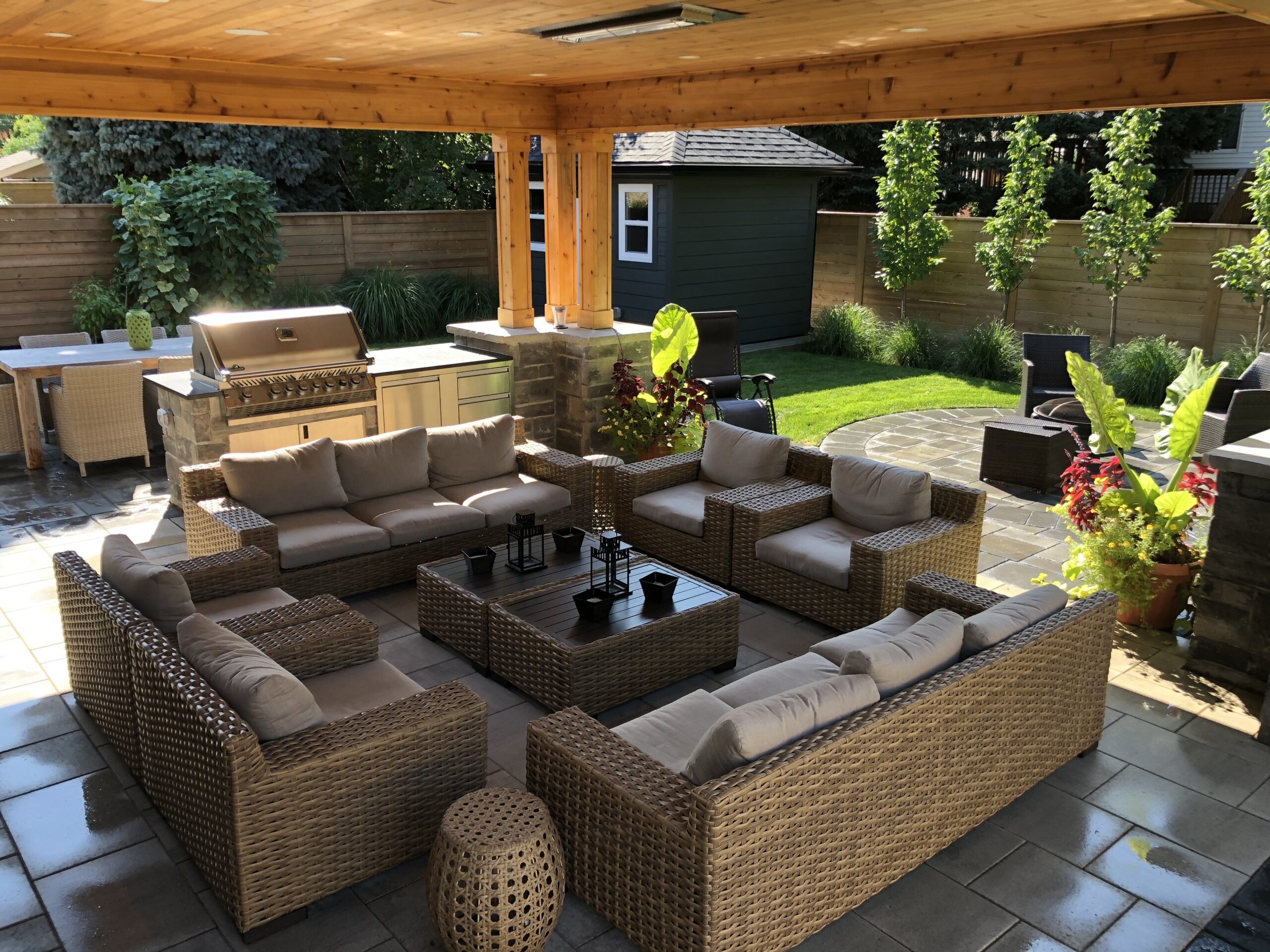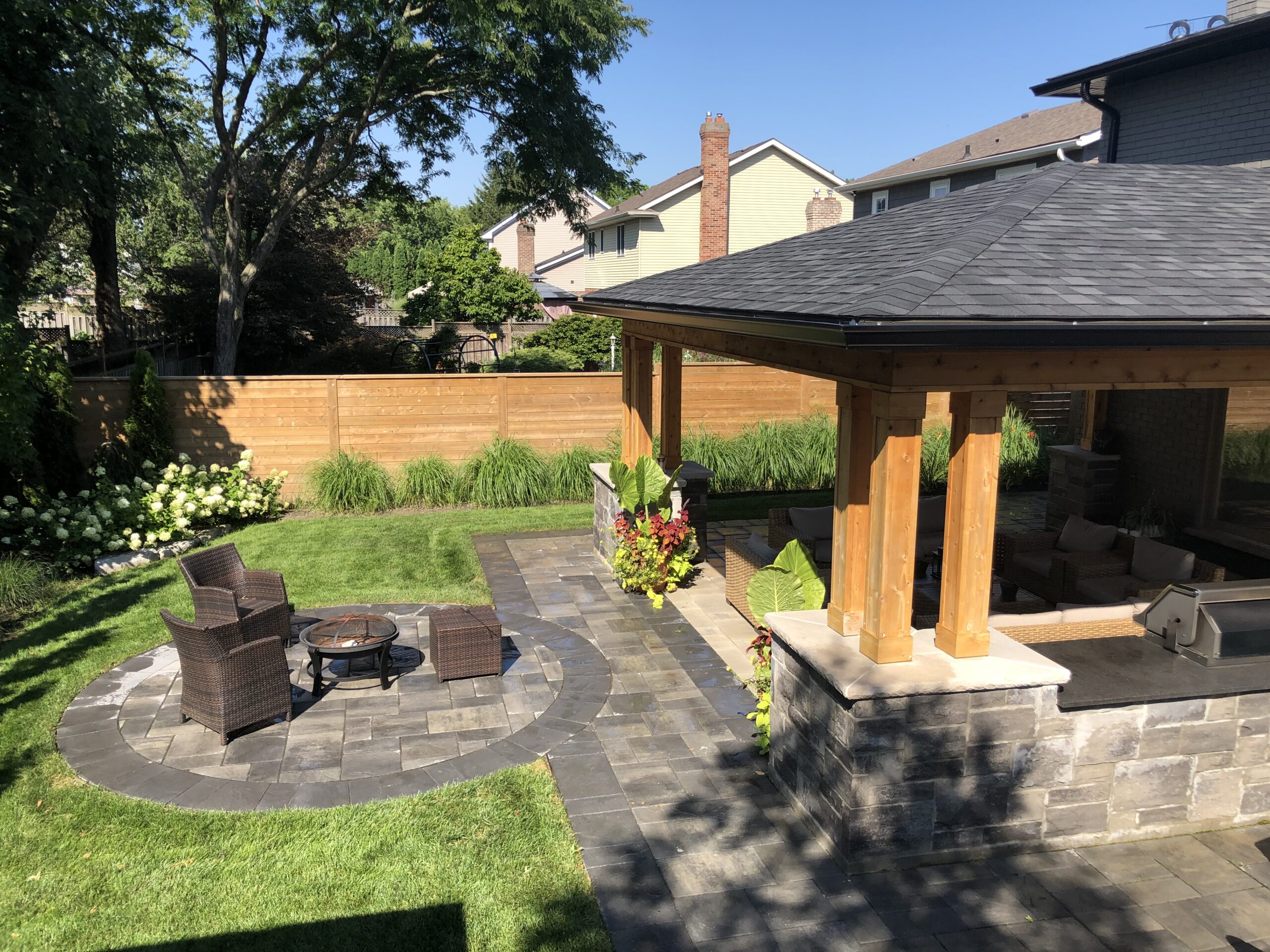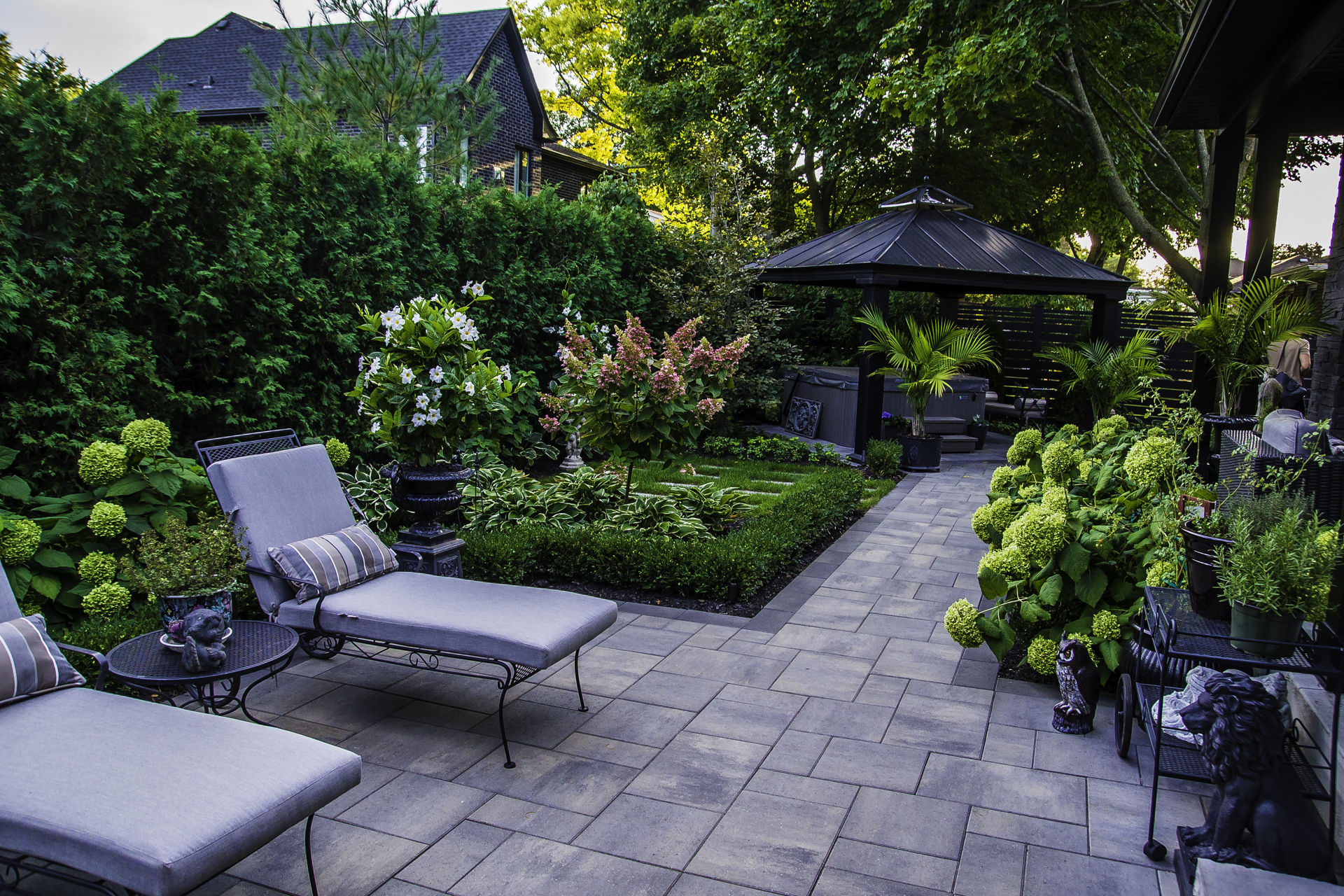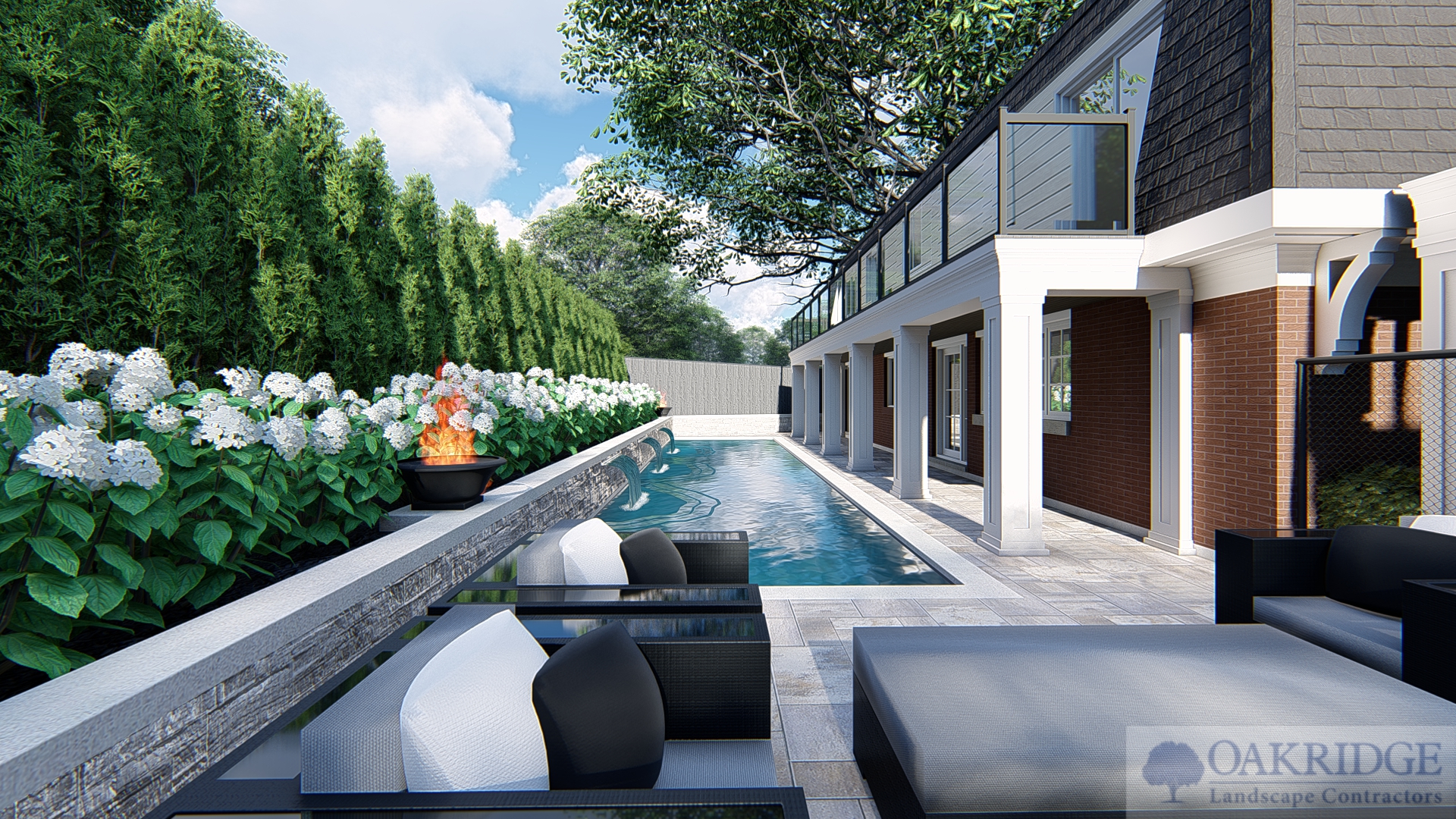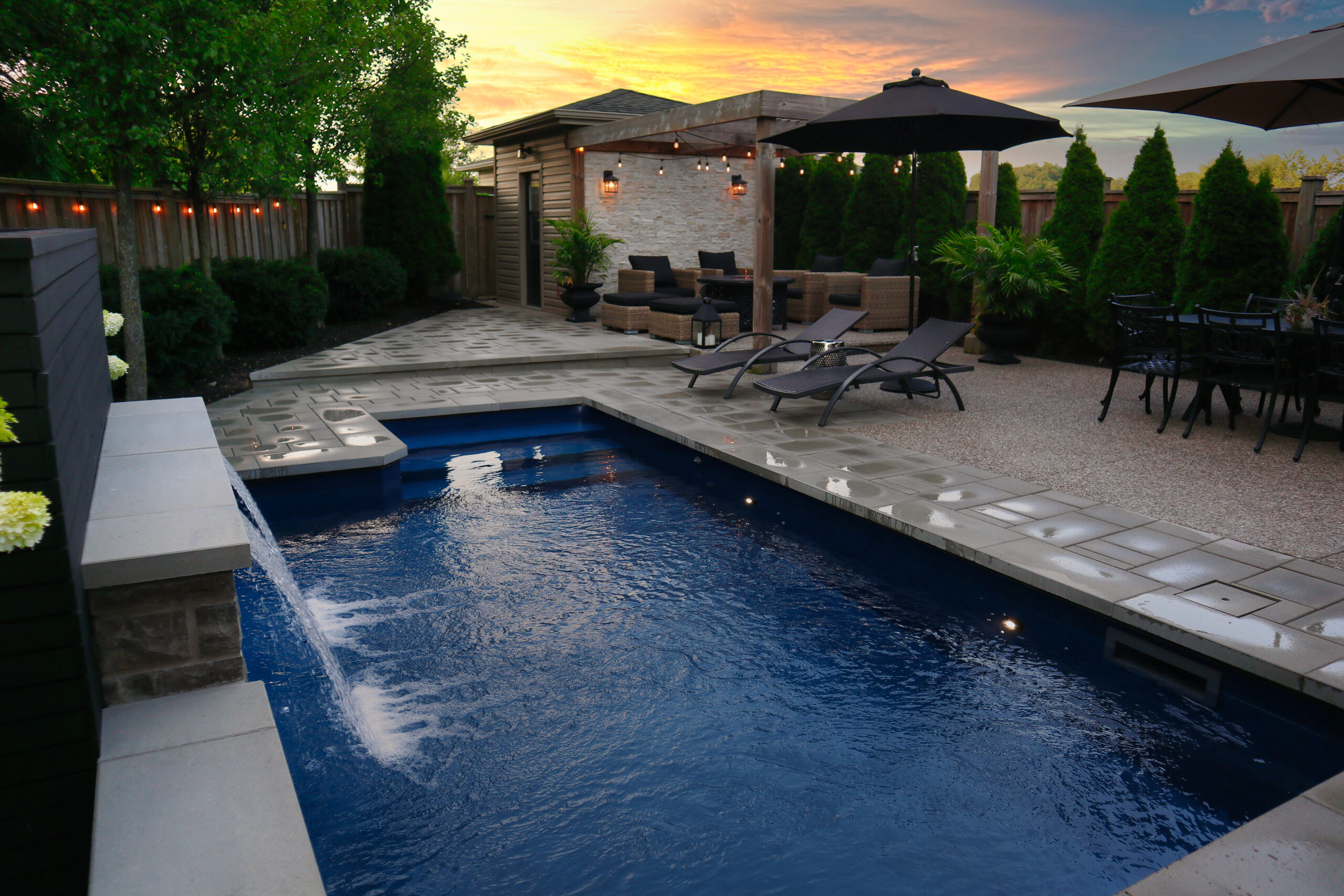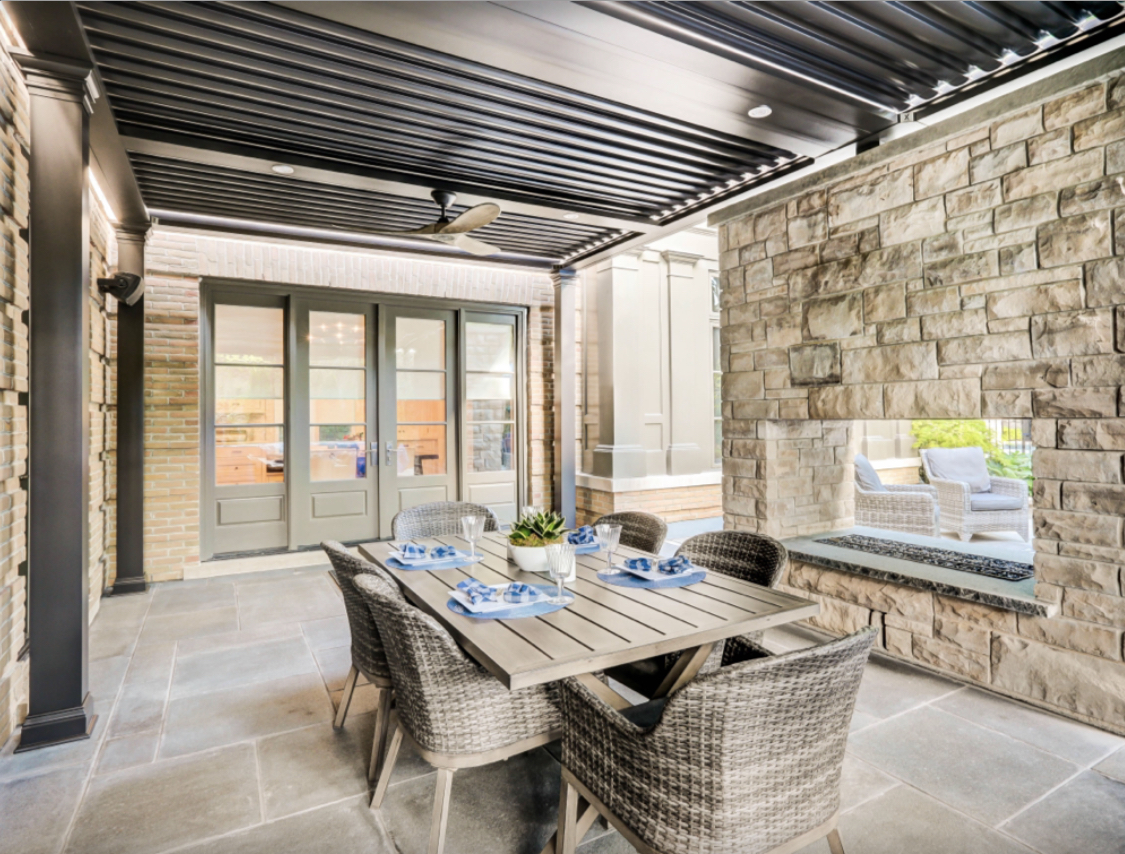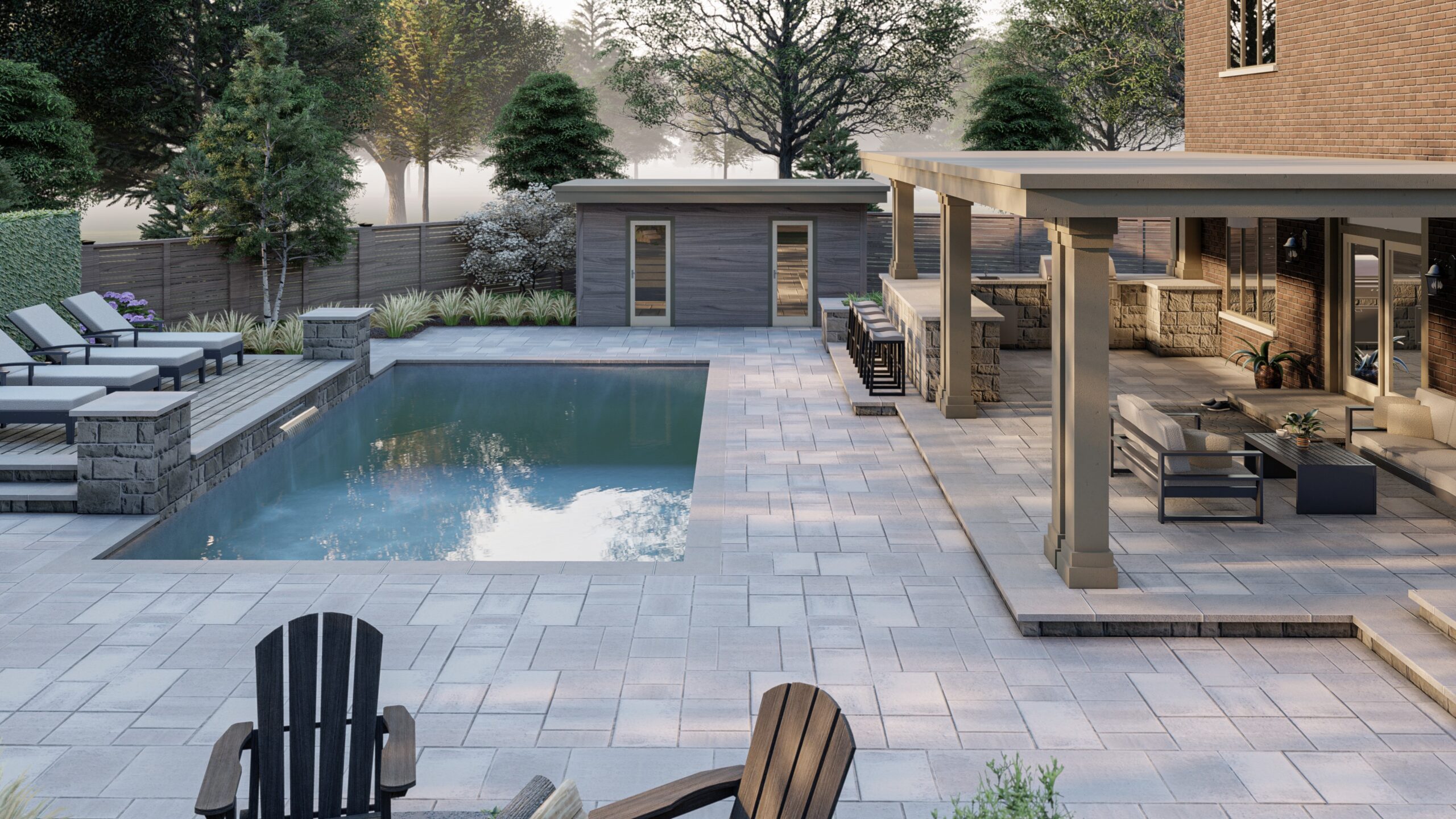
Outdoor lighting does more than extend the use of a space into the evening. When planned properly, it shapes how a landscape is experienced, improves safety, and adds subtle depth after dark. The most successful lighting plans are rarely the most noticeable. Instead, they are carefully integrated into the landscape, so the light feels intentional without the fixtures drawing attention to themselves.
At Oakridge, ambient lighting is approached as a functional layer of the overall design, not an afterthought. Every fixture placement, light level, and angle is considered alongside hardscape, planting, and circulation to ensure the space feels cohesive day and night.
Guiding Movement and Improving Safety
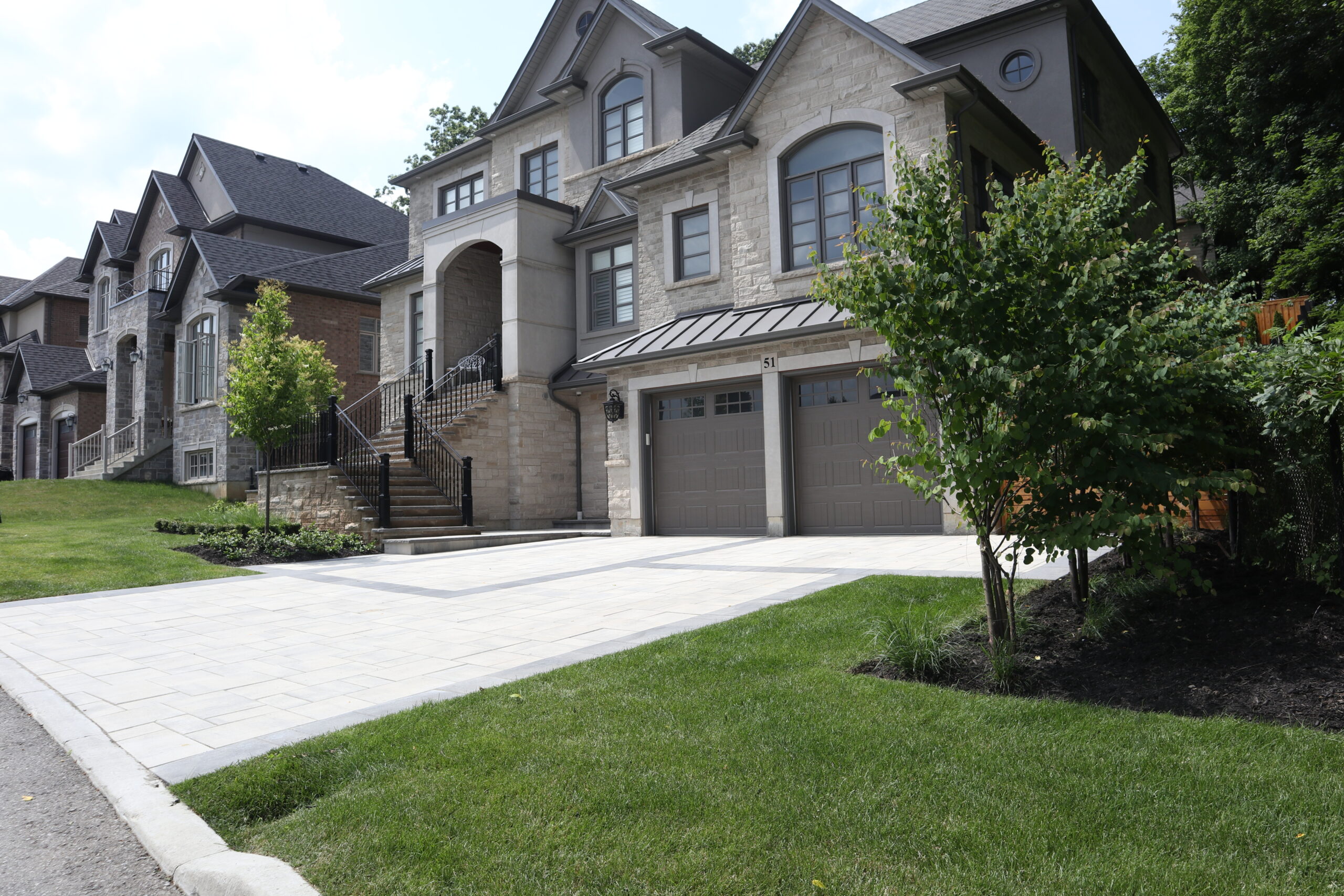
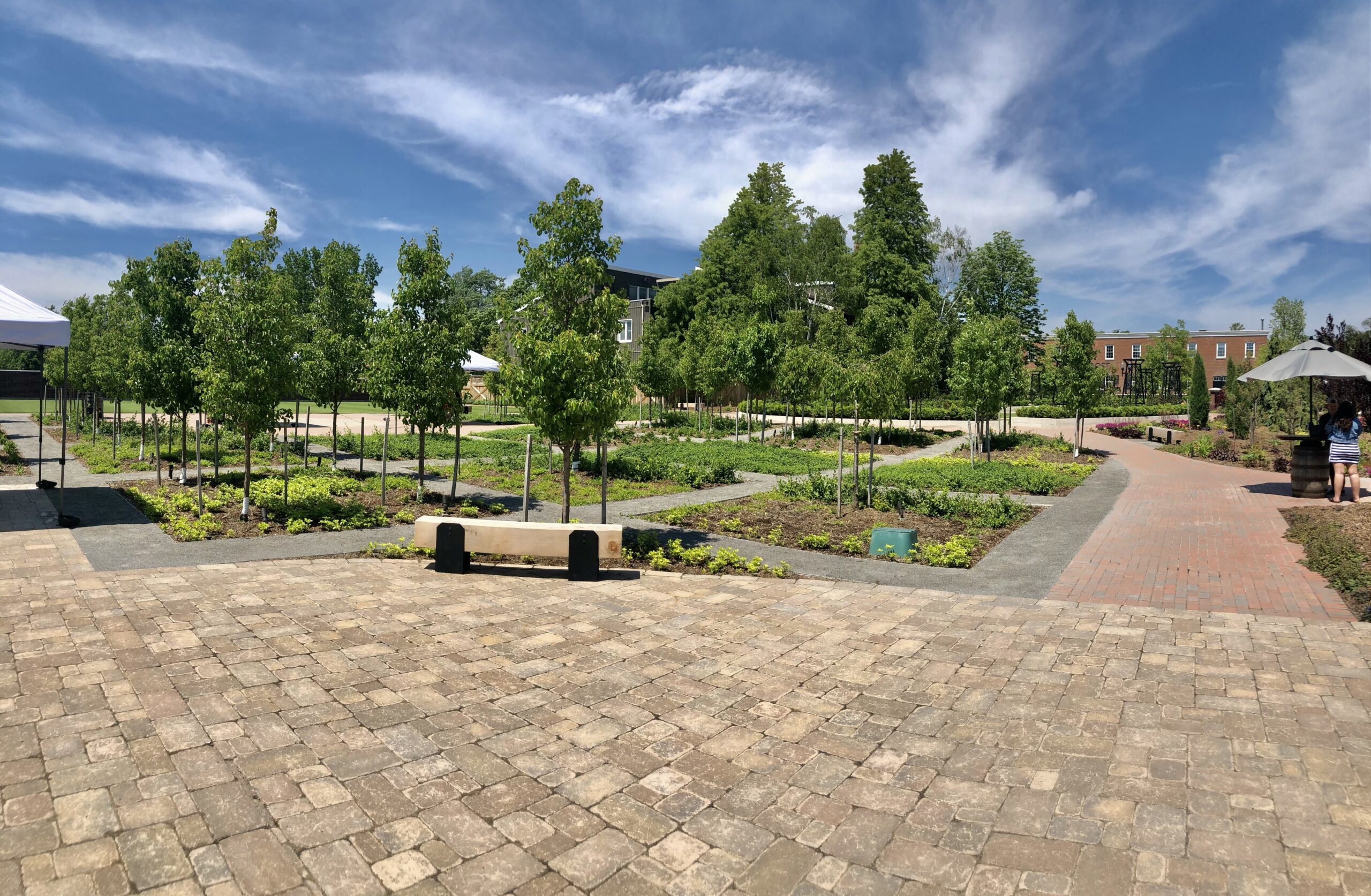
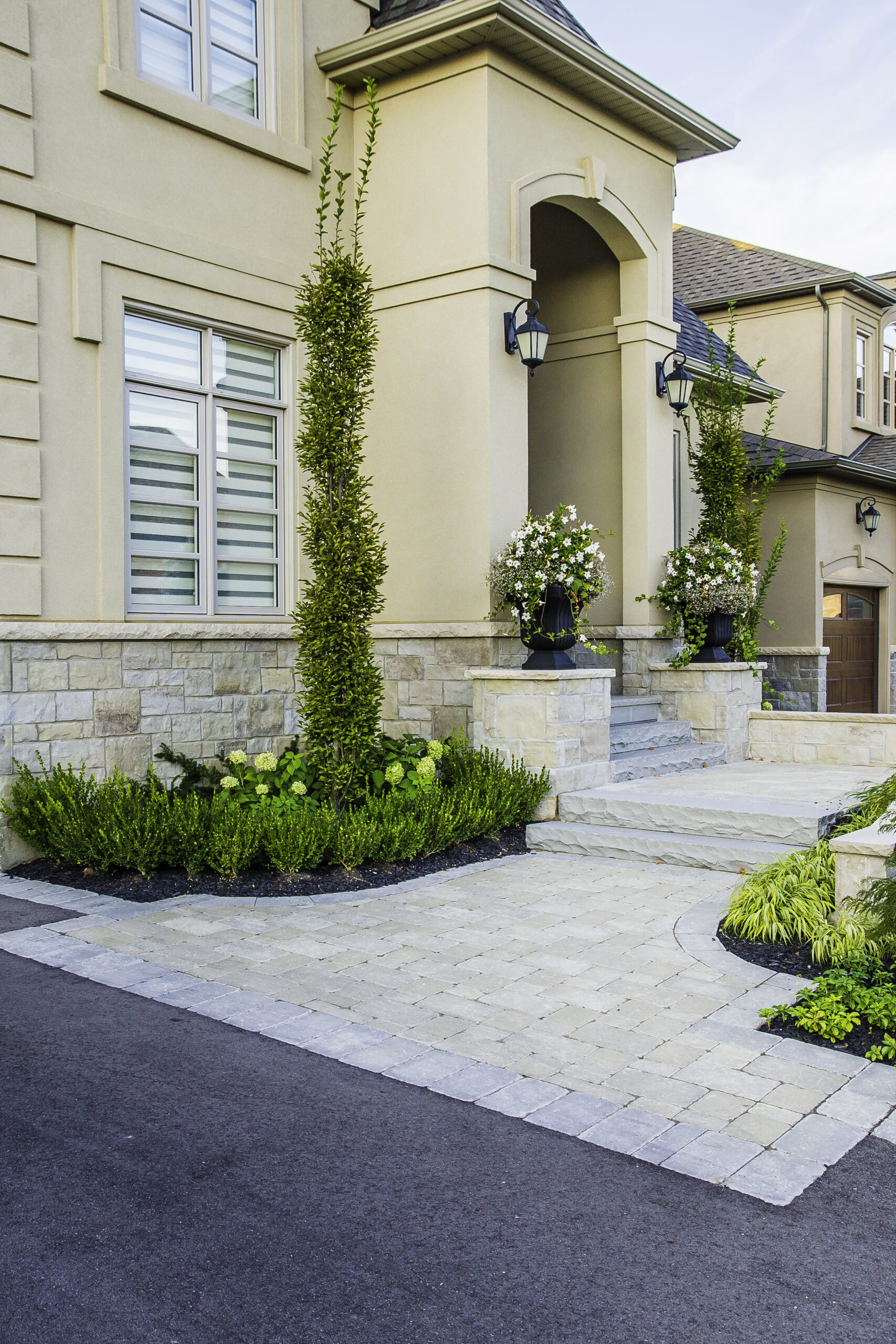
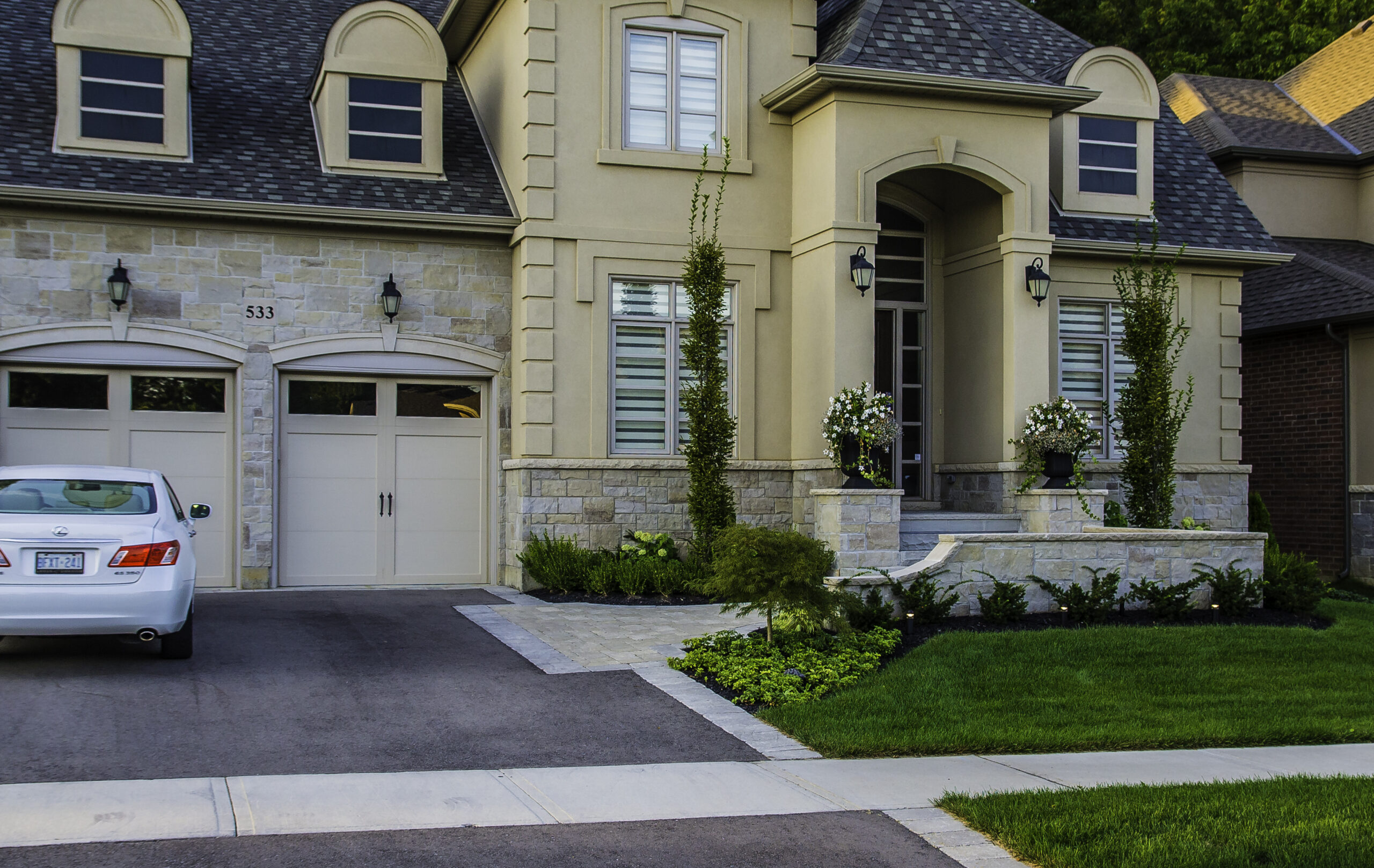
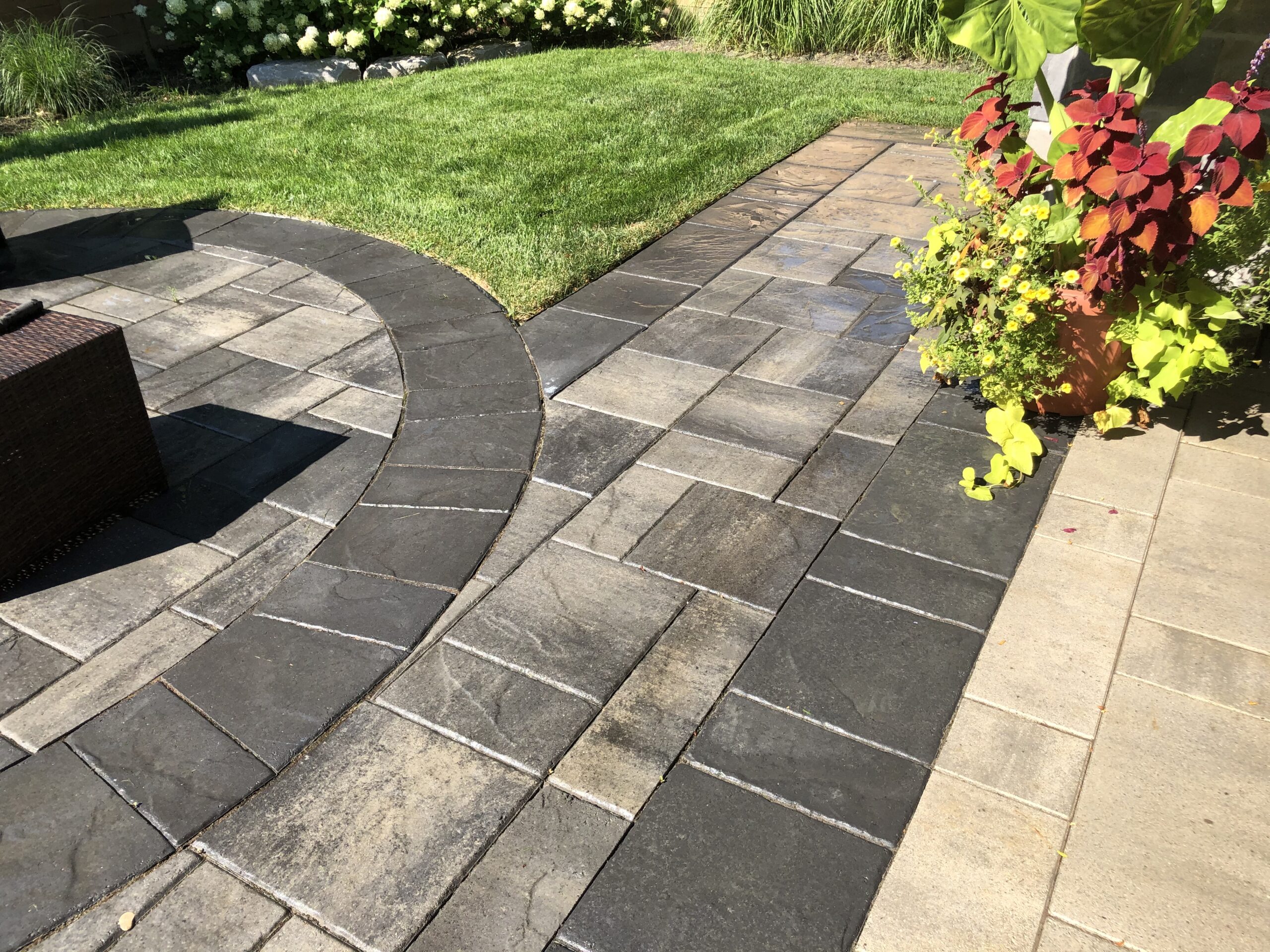
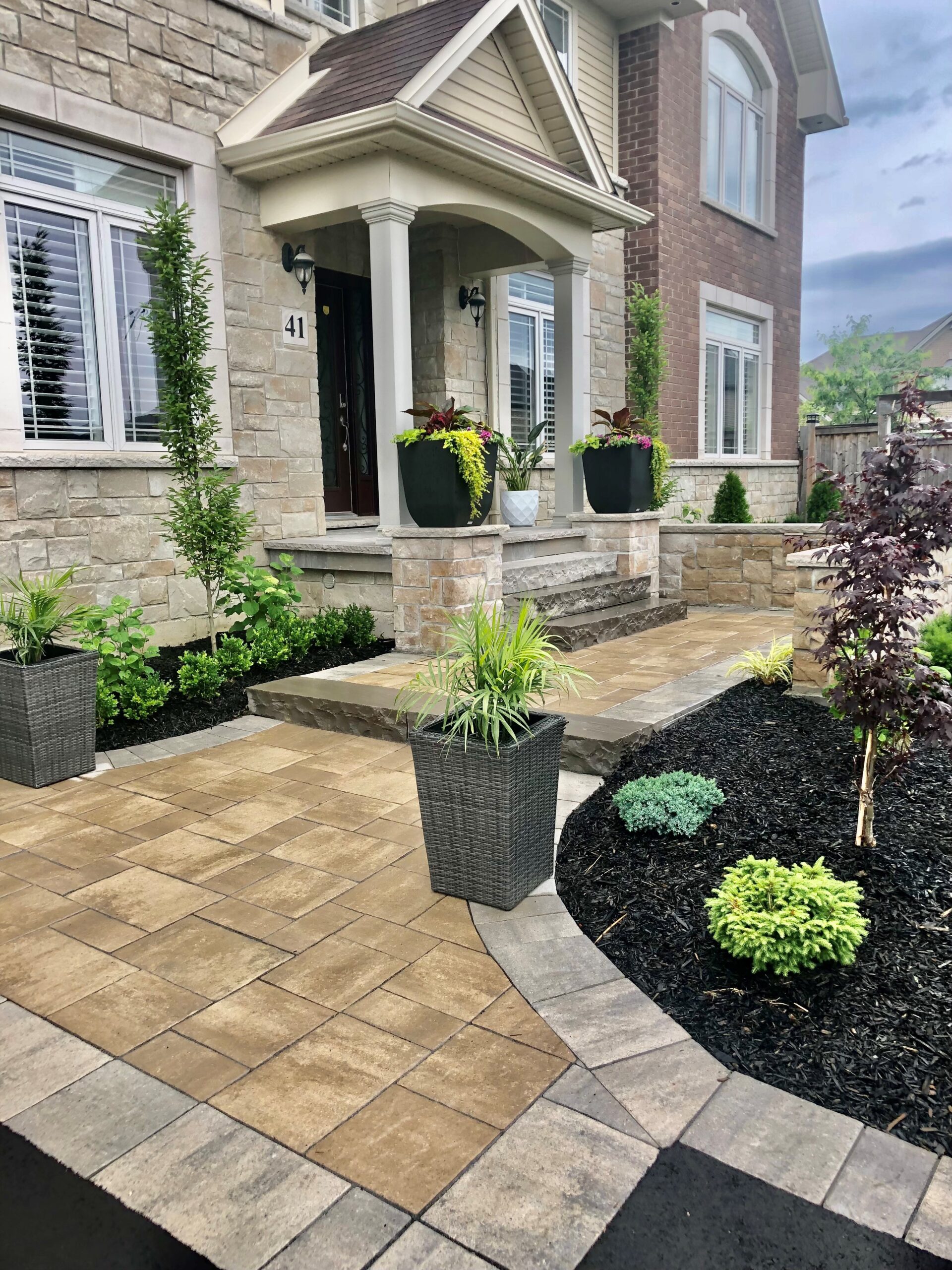
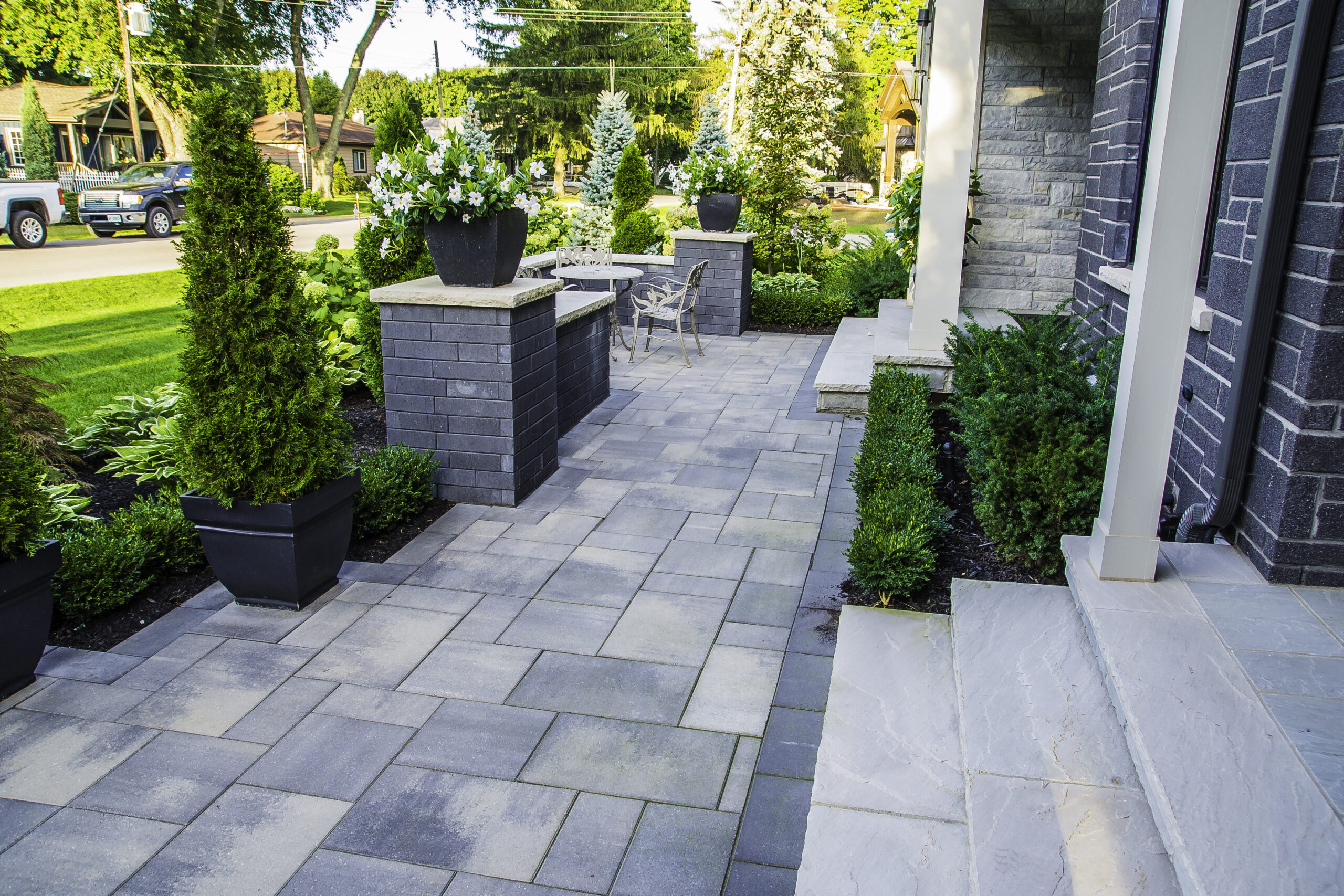
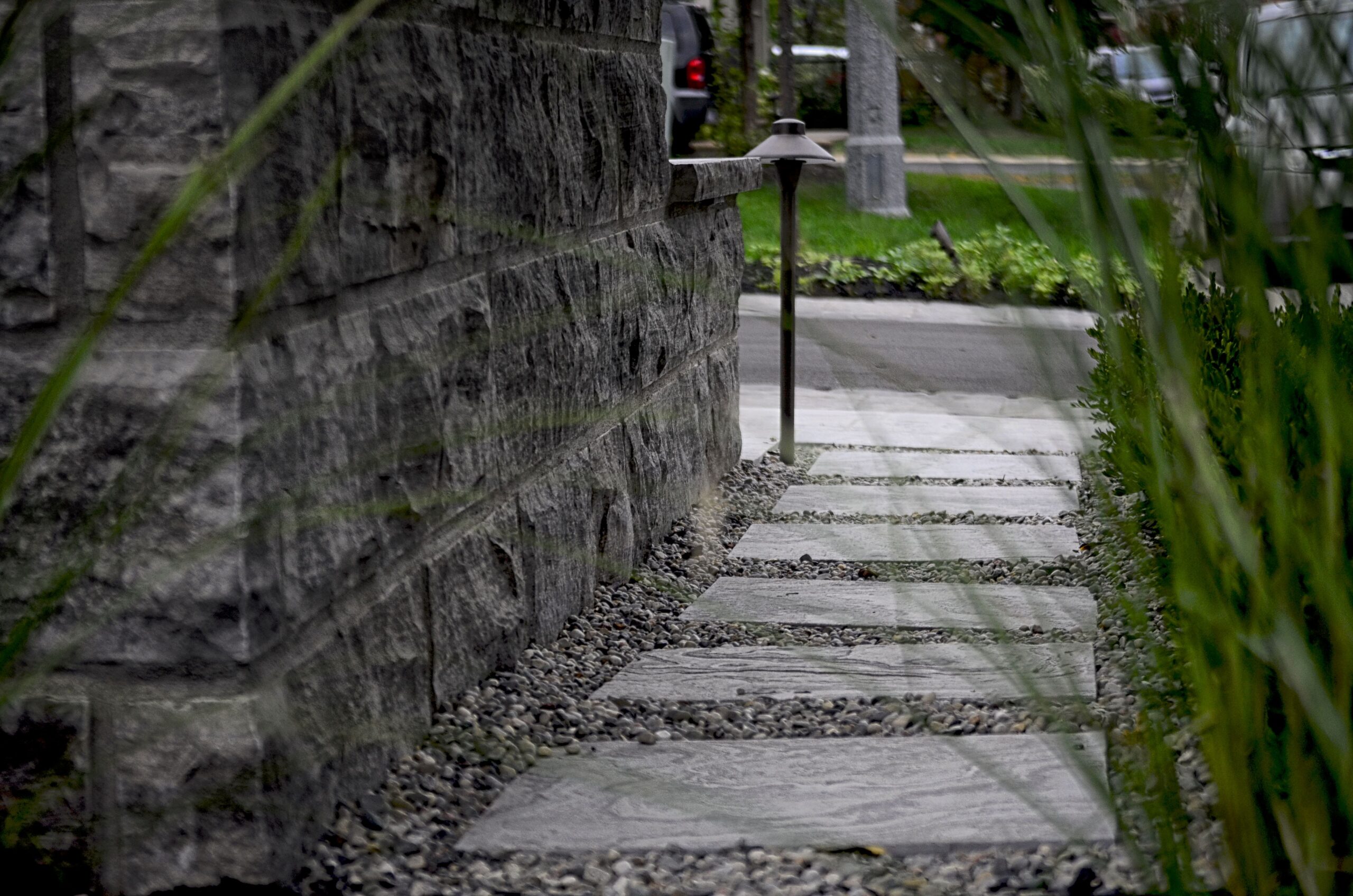
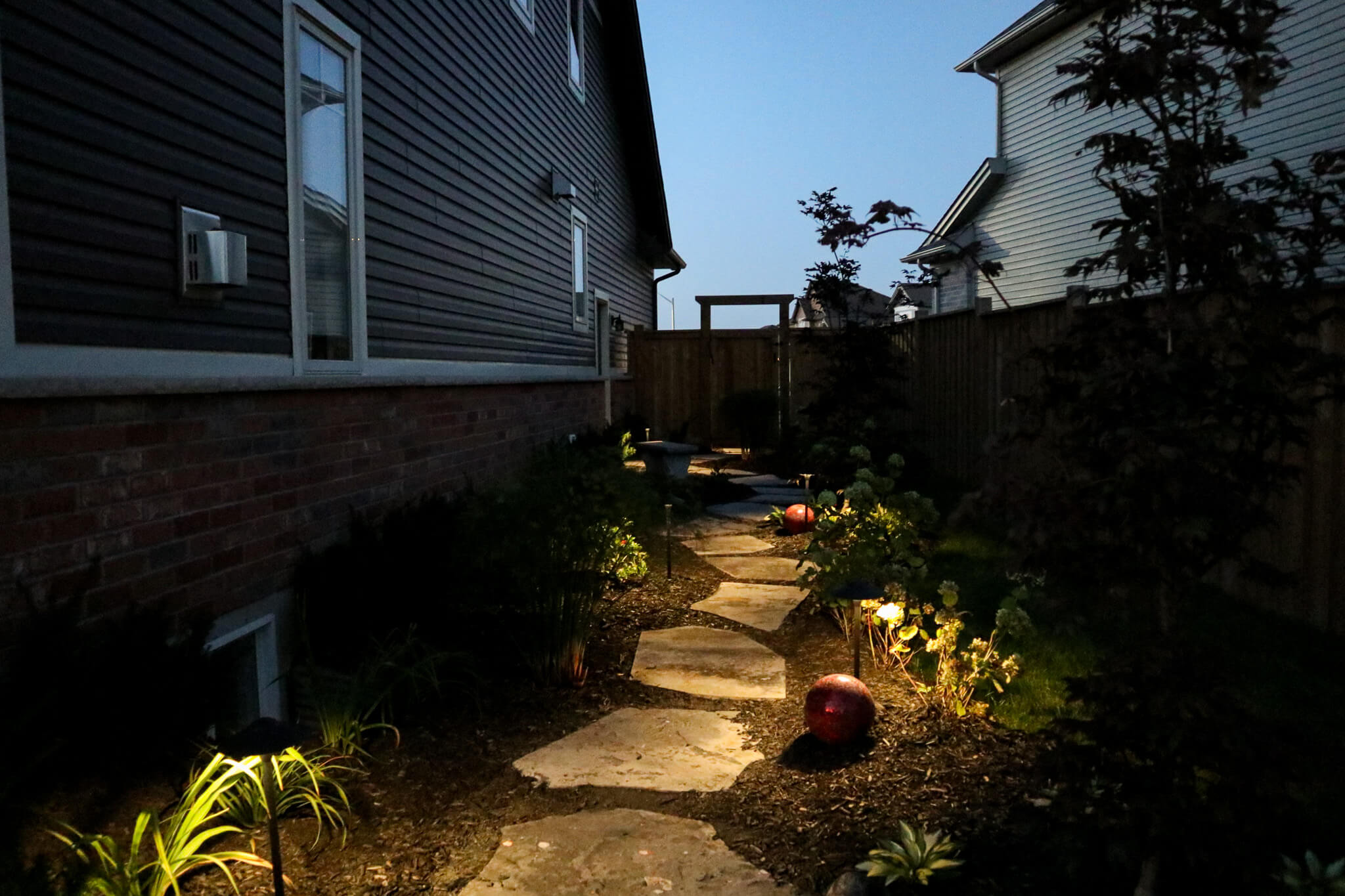
One of the most practical uses of ambient lighting is guiding movement through a space. Path lighting helps define walkways, entrances, and transitions without overpowering the surroundings. Soft, low-level illumination along paths improves visibility while maintaining a calm atmosphere, especially in residential settings where harsh lighting can feel out of place.
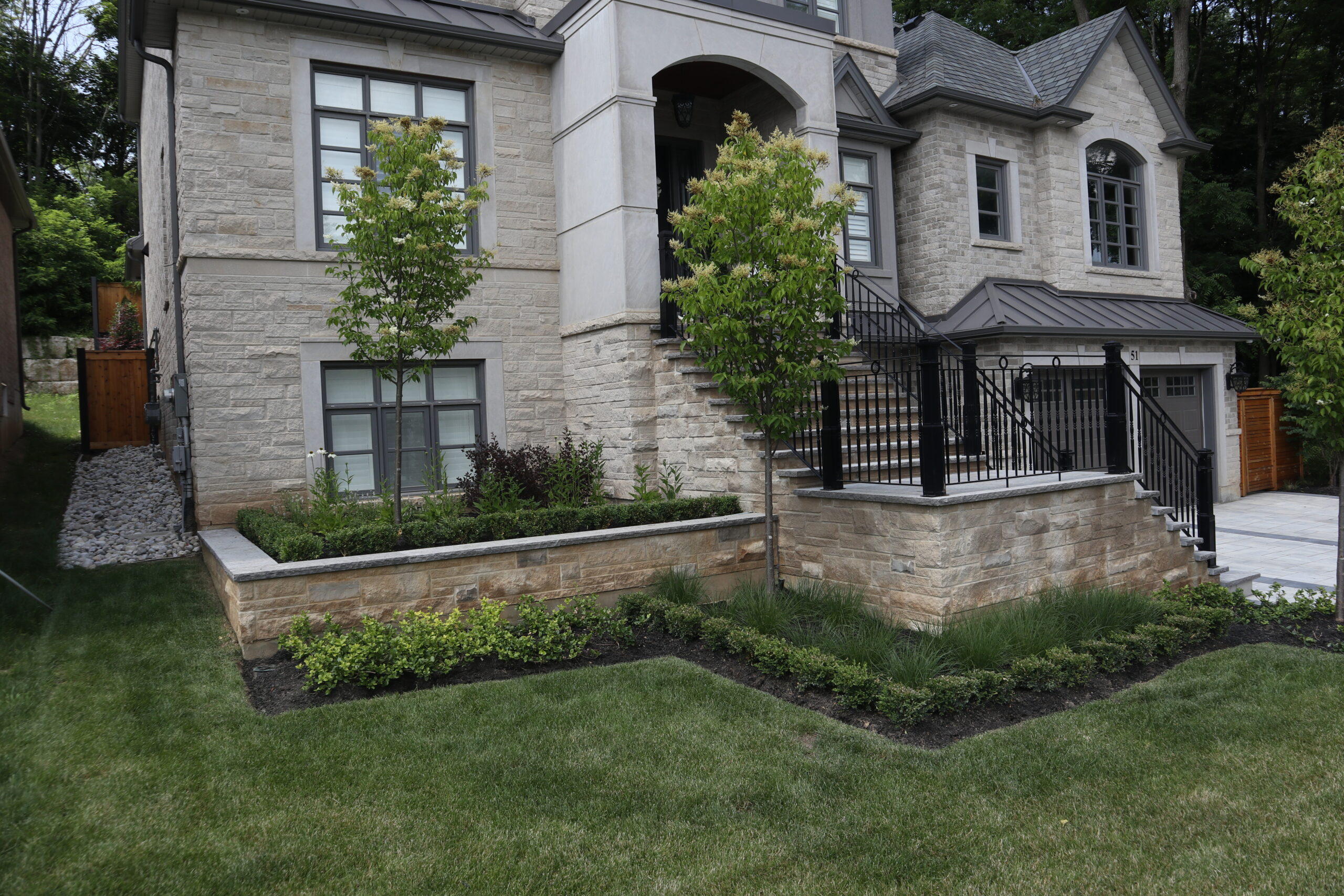
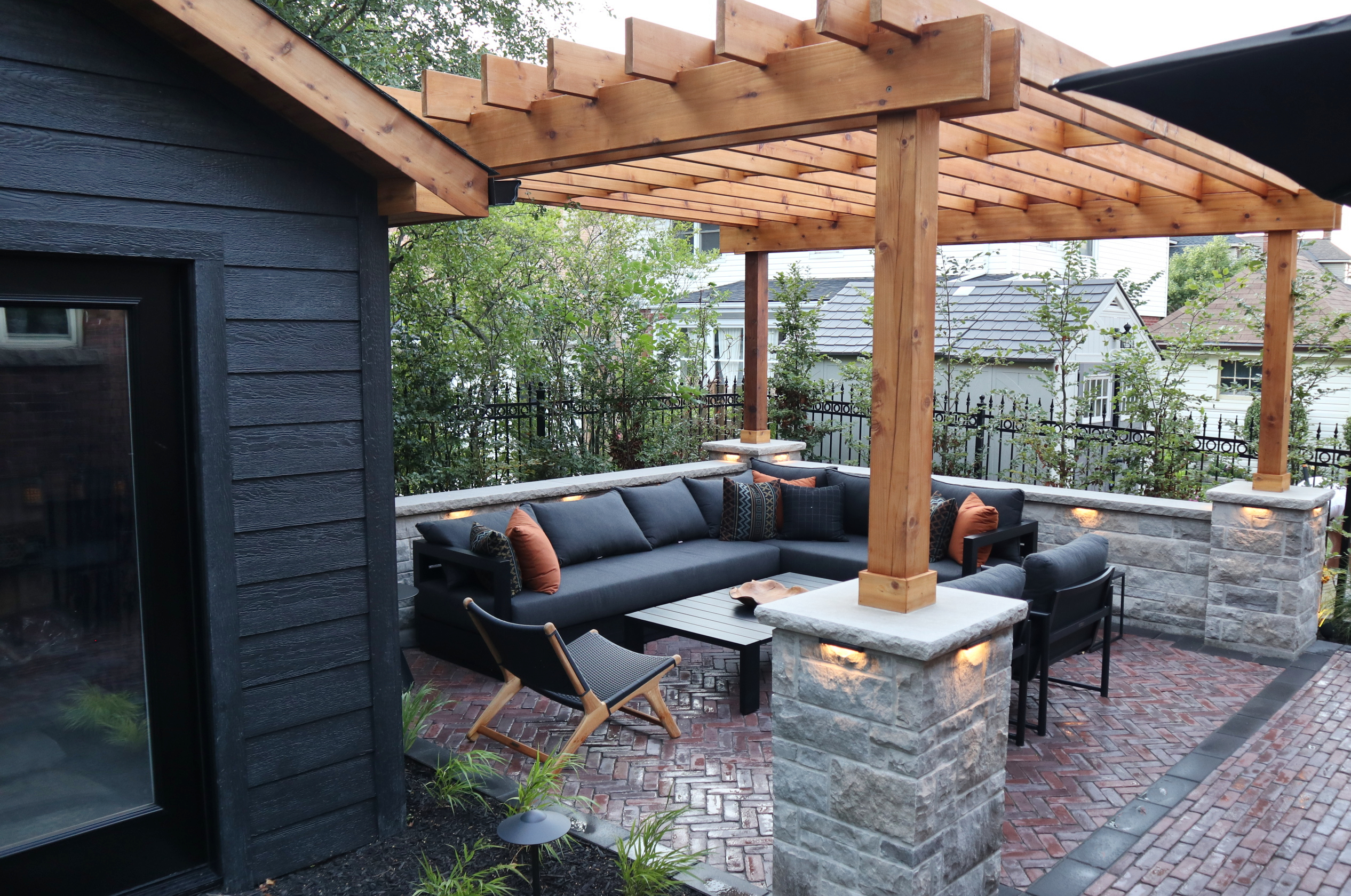
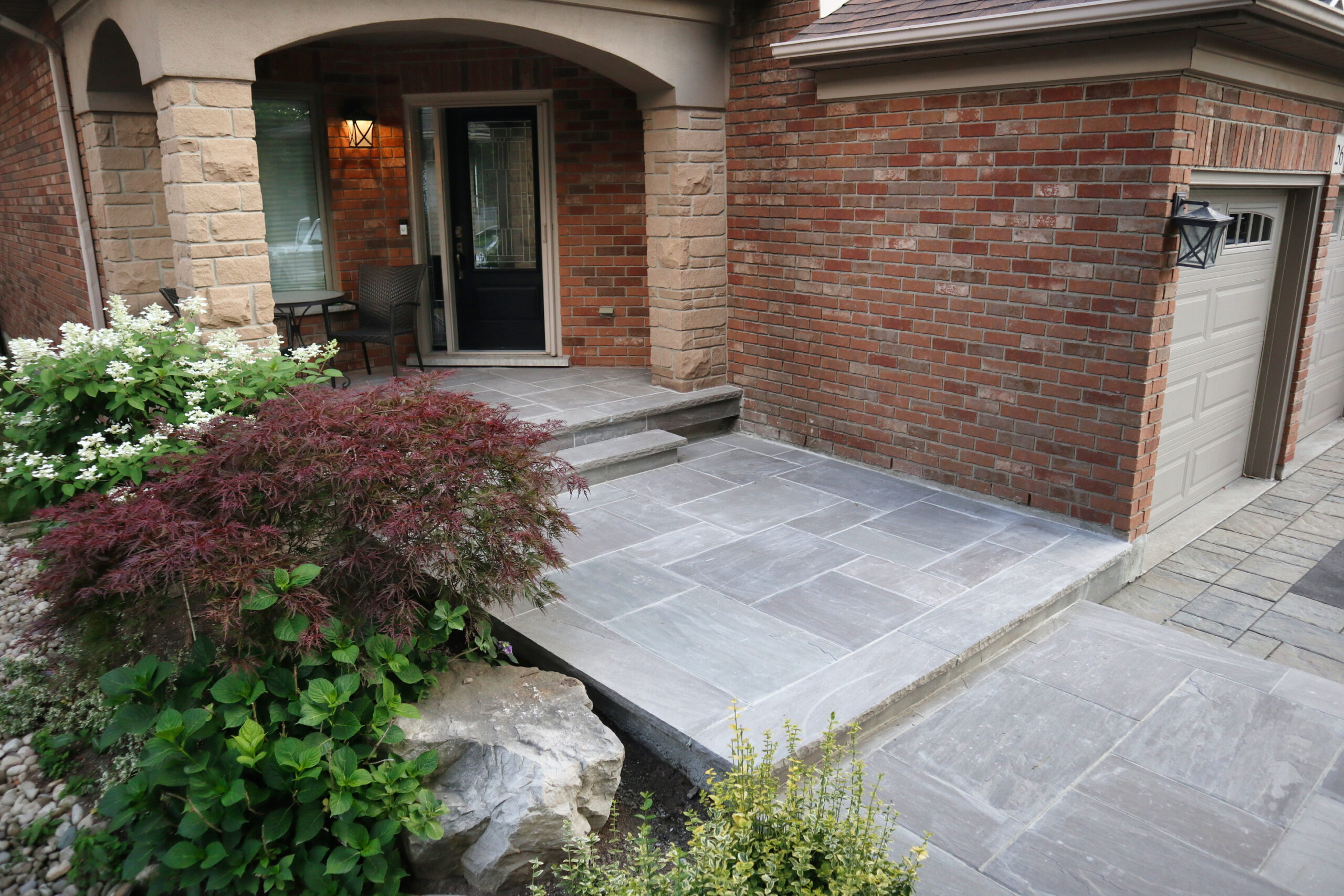
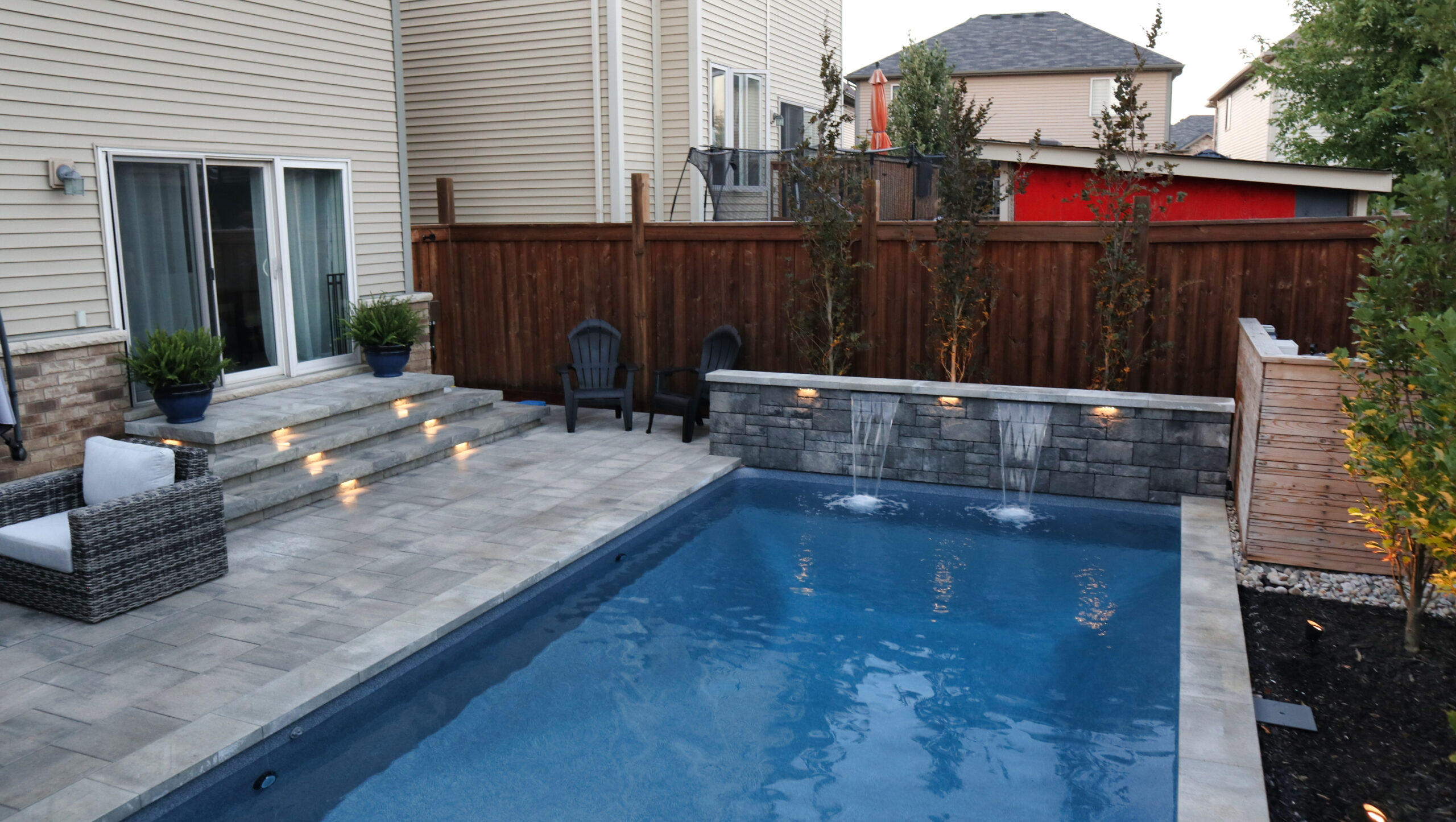
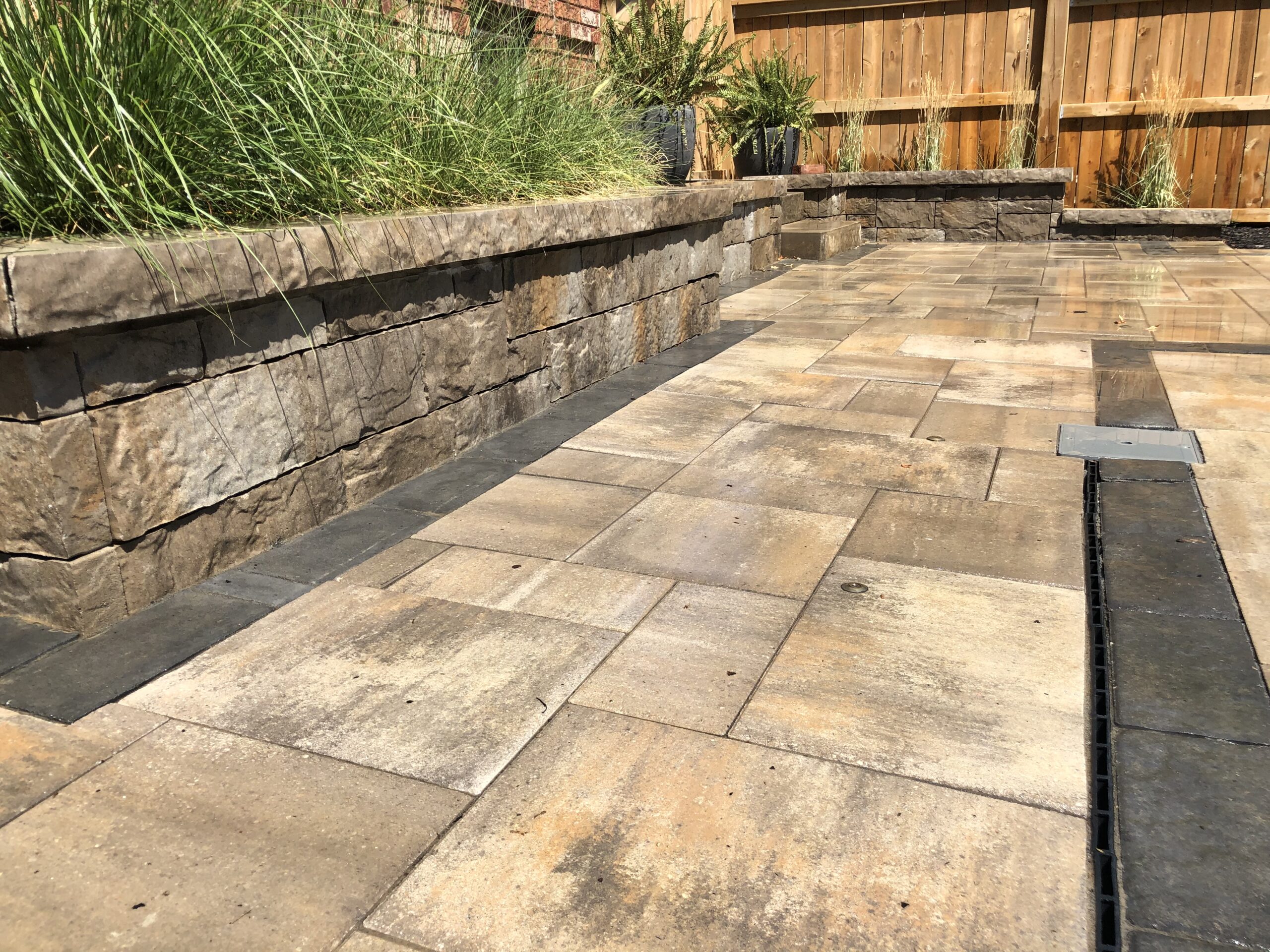
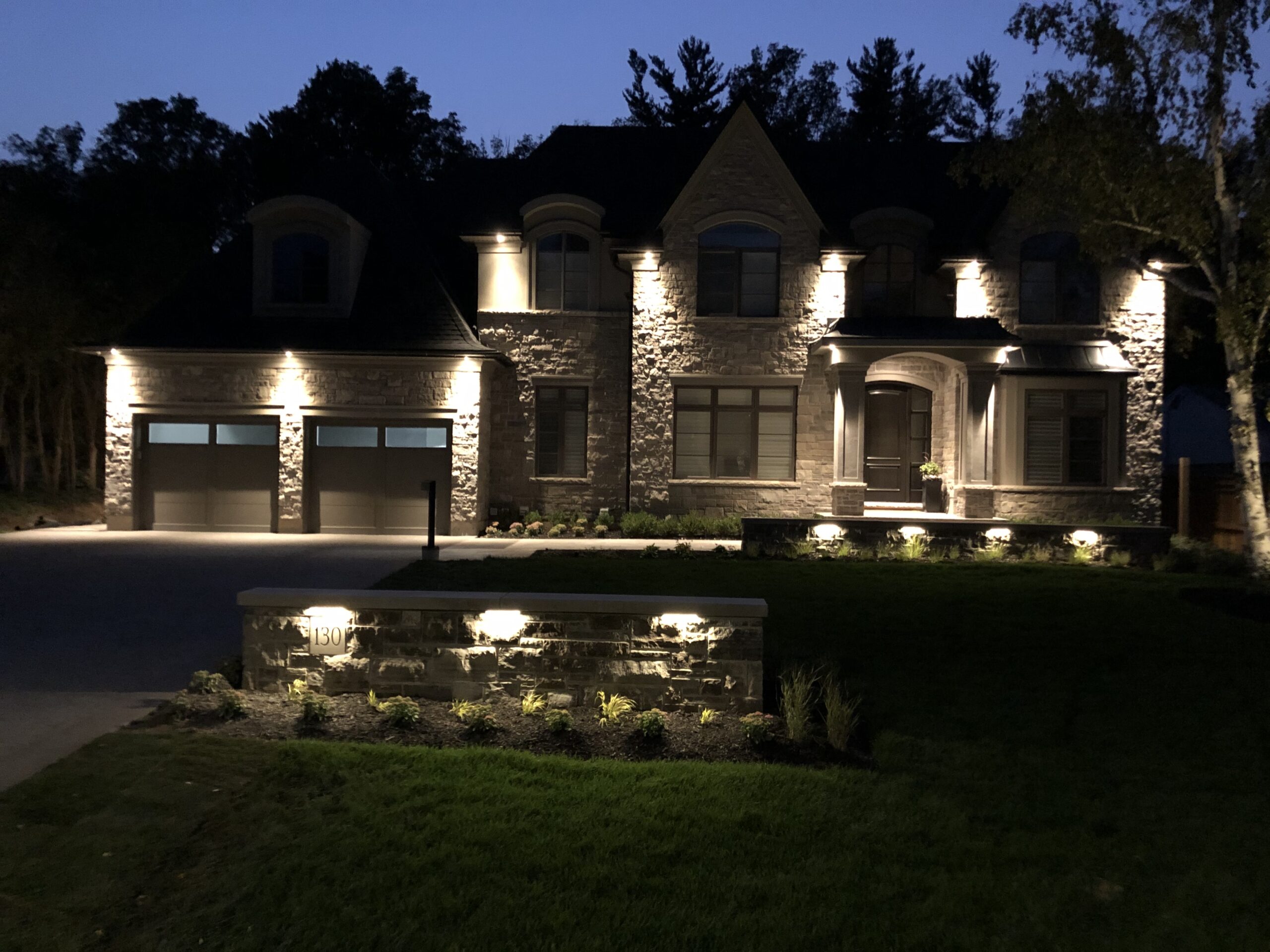
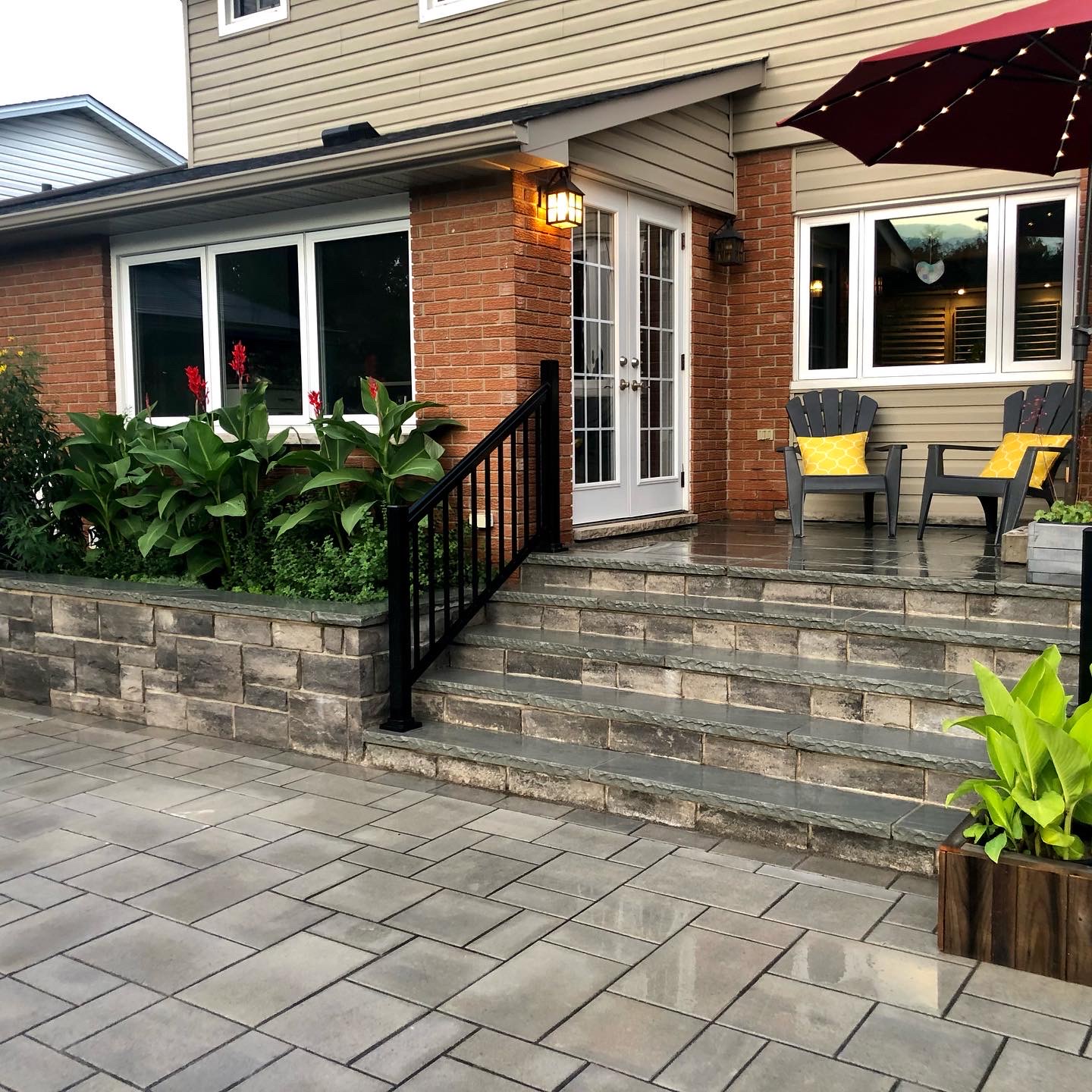
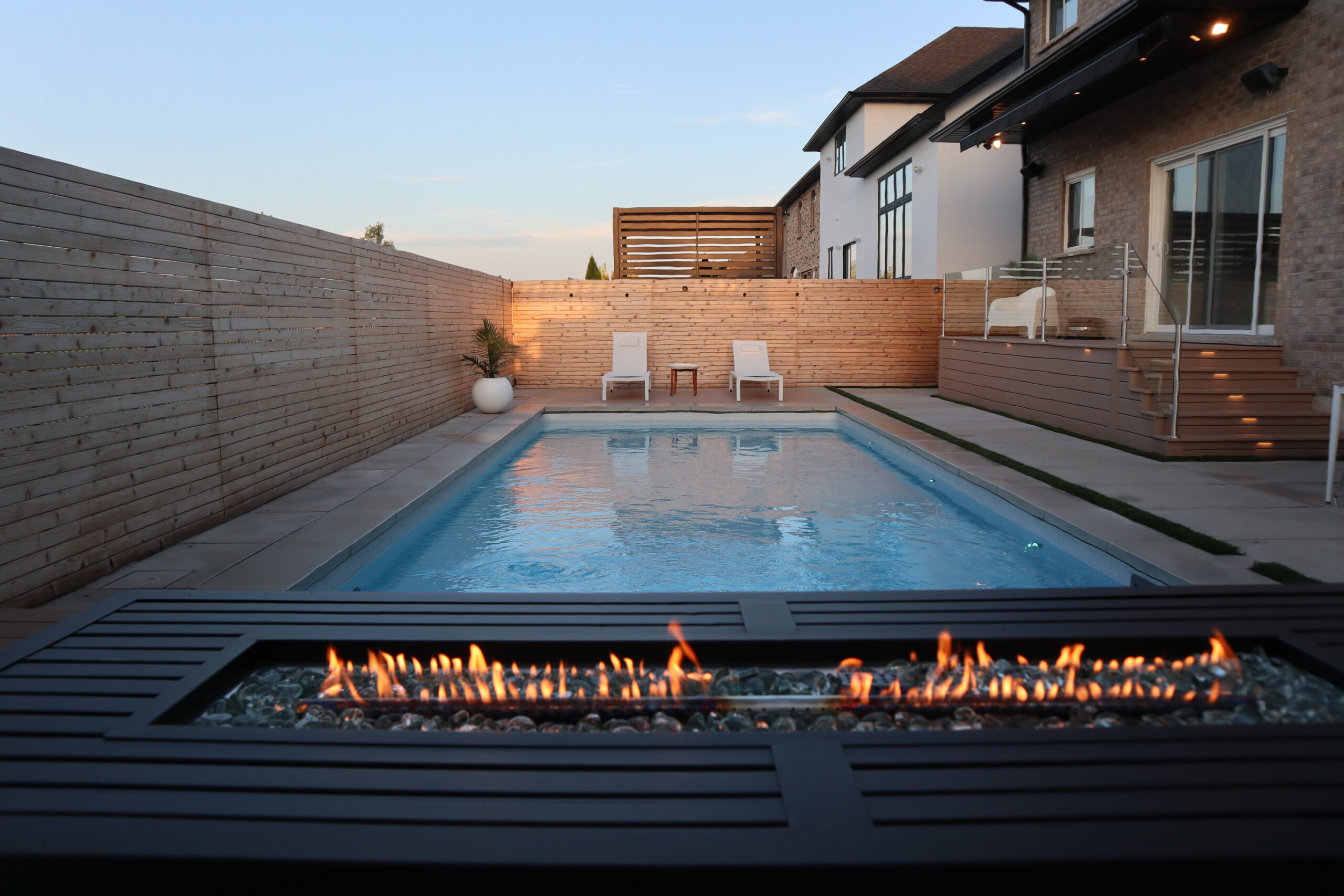
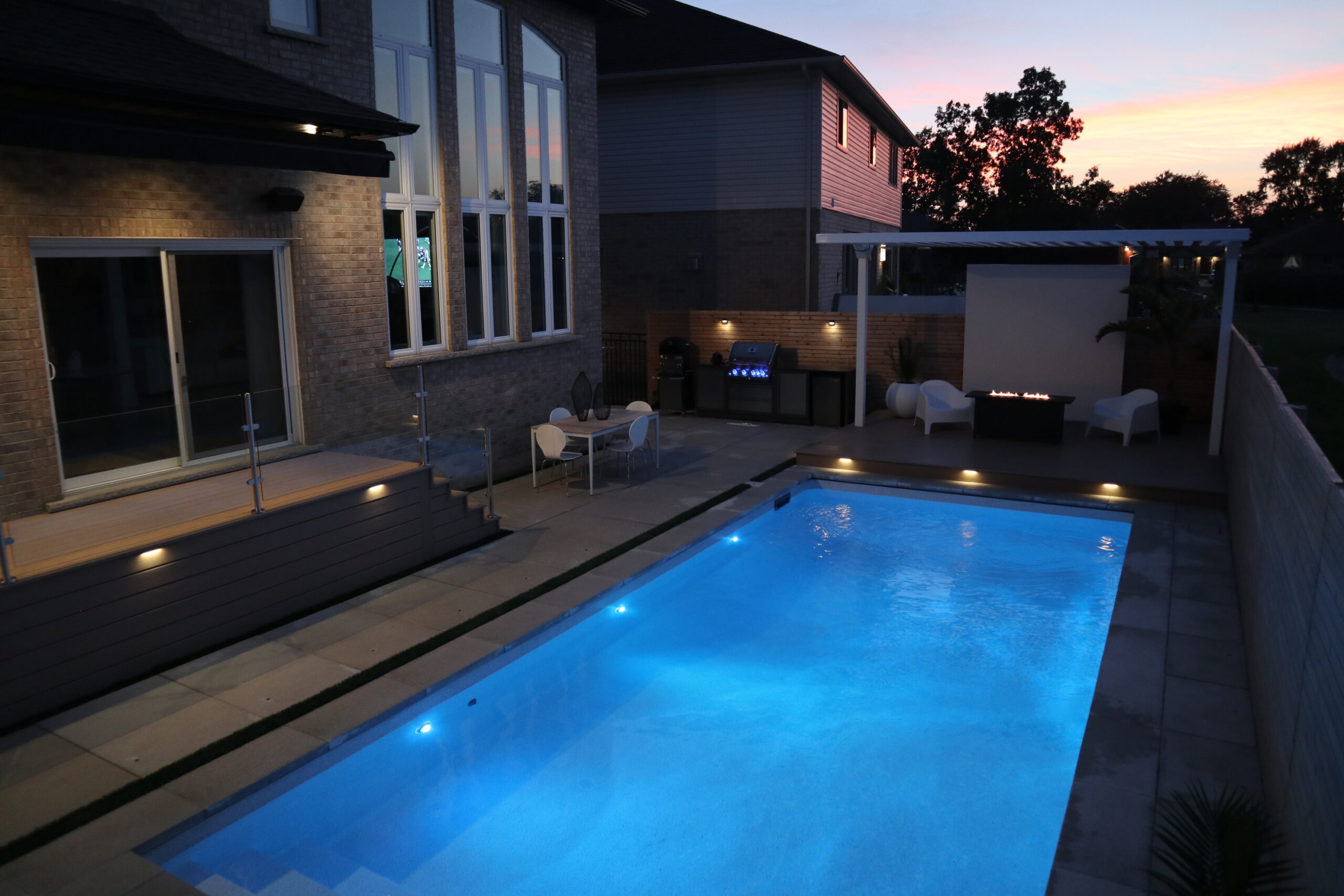
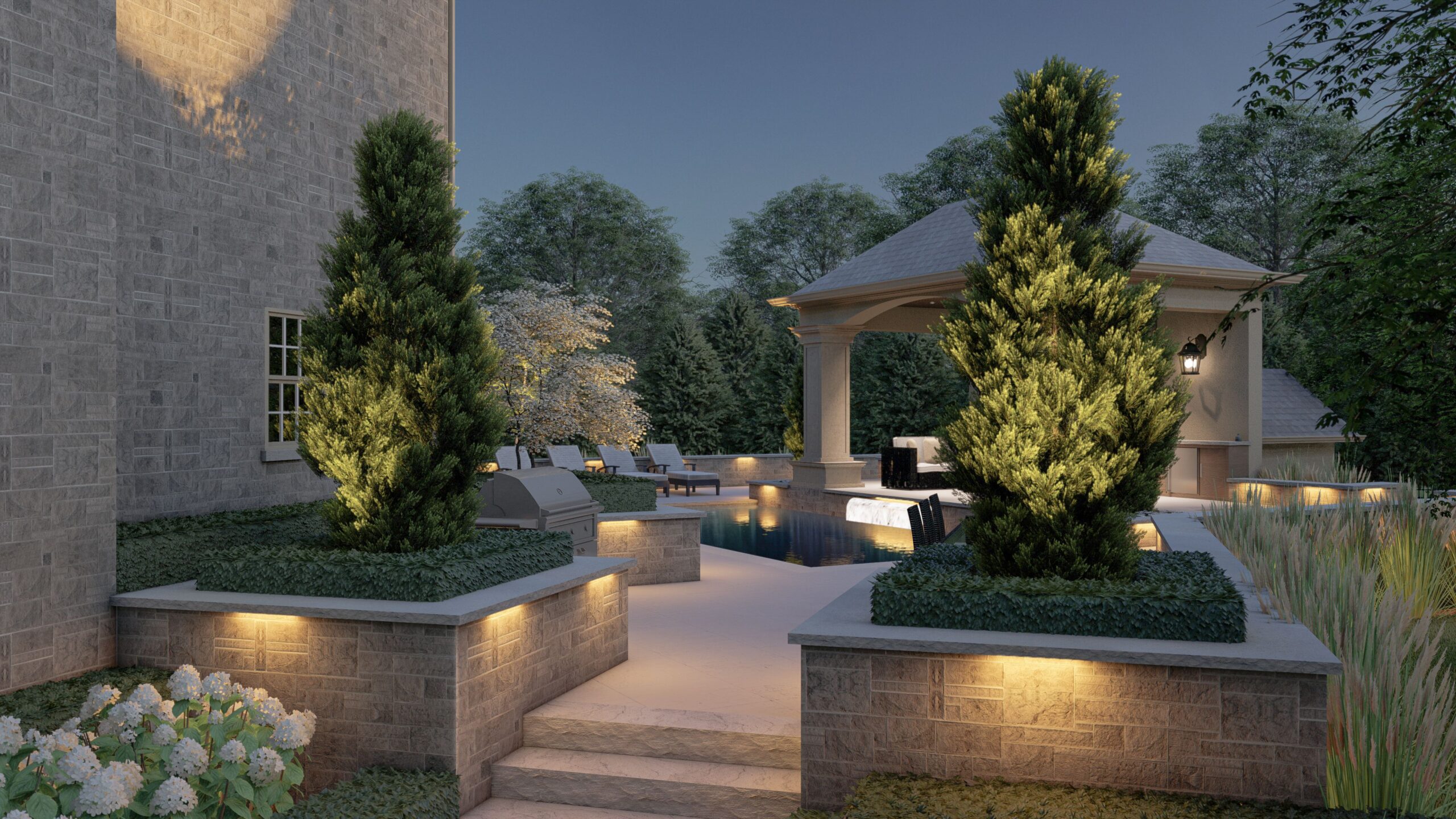
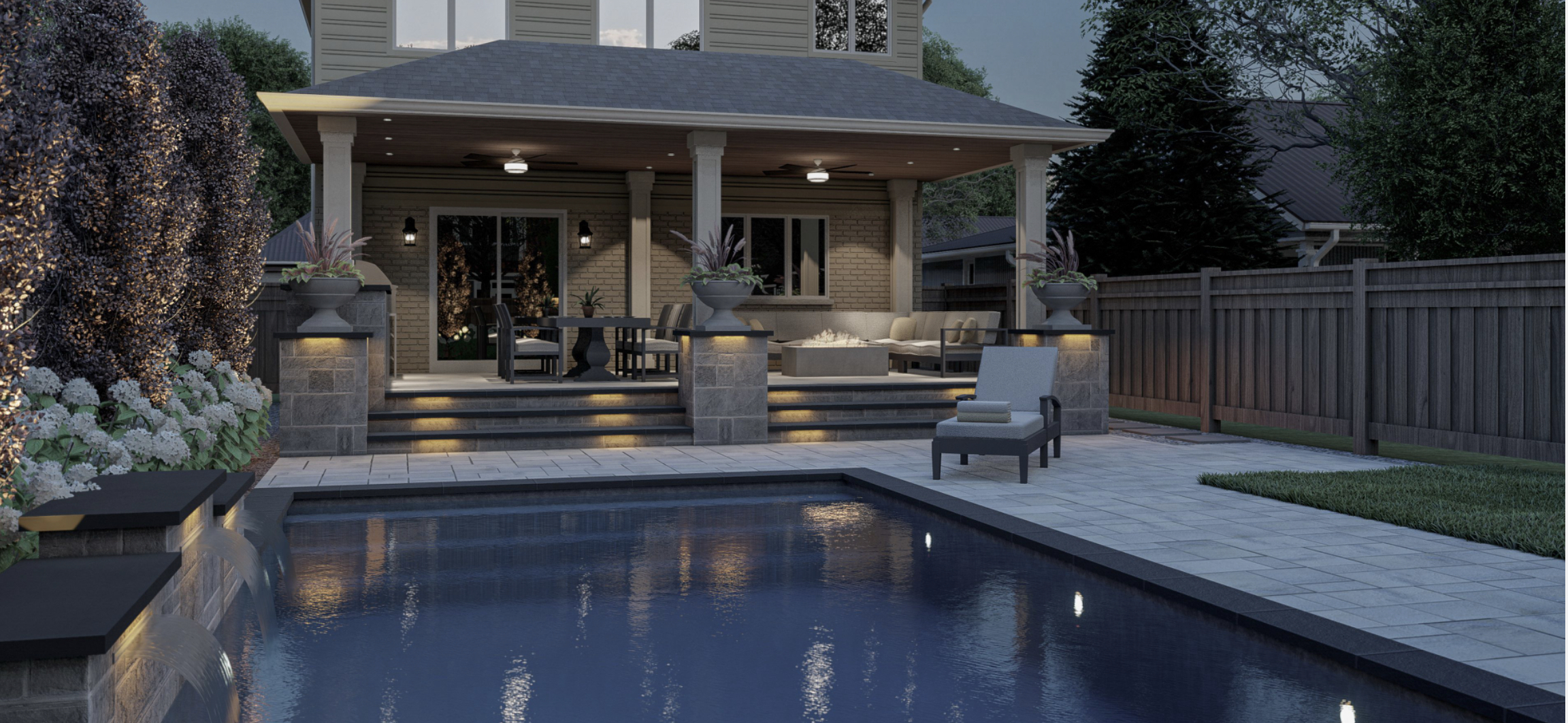
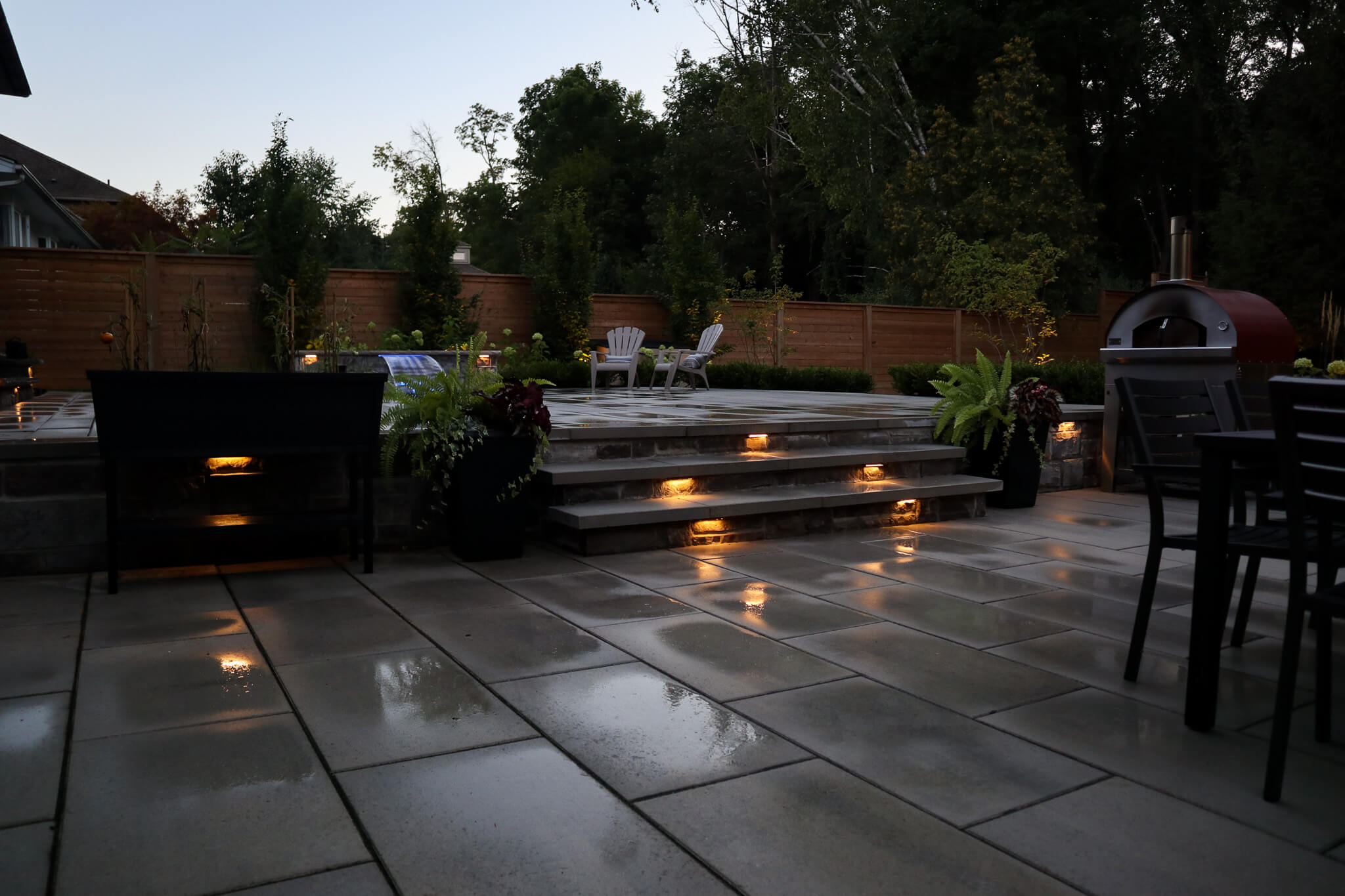
Step lighting plays a similar role. Integrated directly into risers, retaining walls, or adjacent structures, these fixtures improve safety on changes in elevation while remaining discreet. By concealing the source and allowing the light to wash gently across surfaces, steps remain visible without creating glare or visual clutter.
Extending Outdoor Living Areas
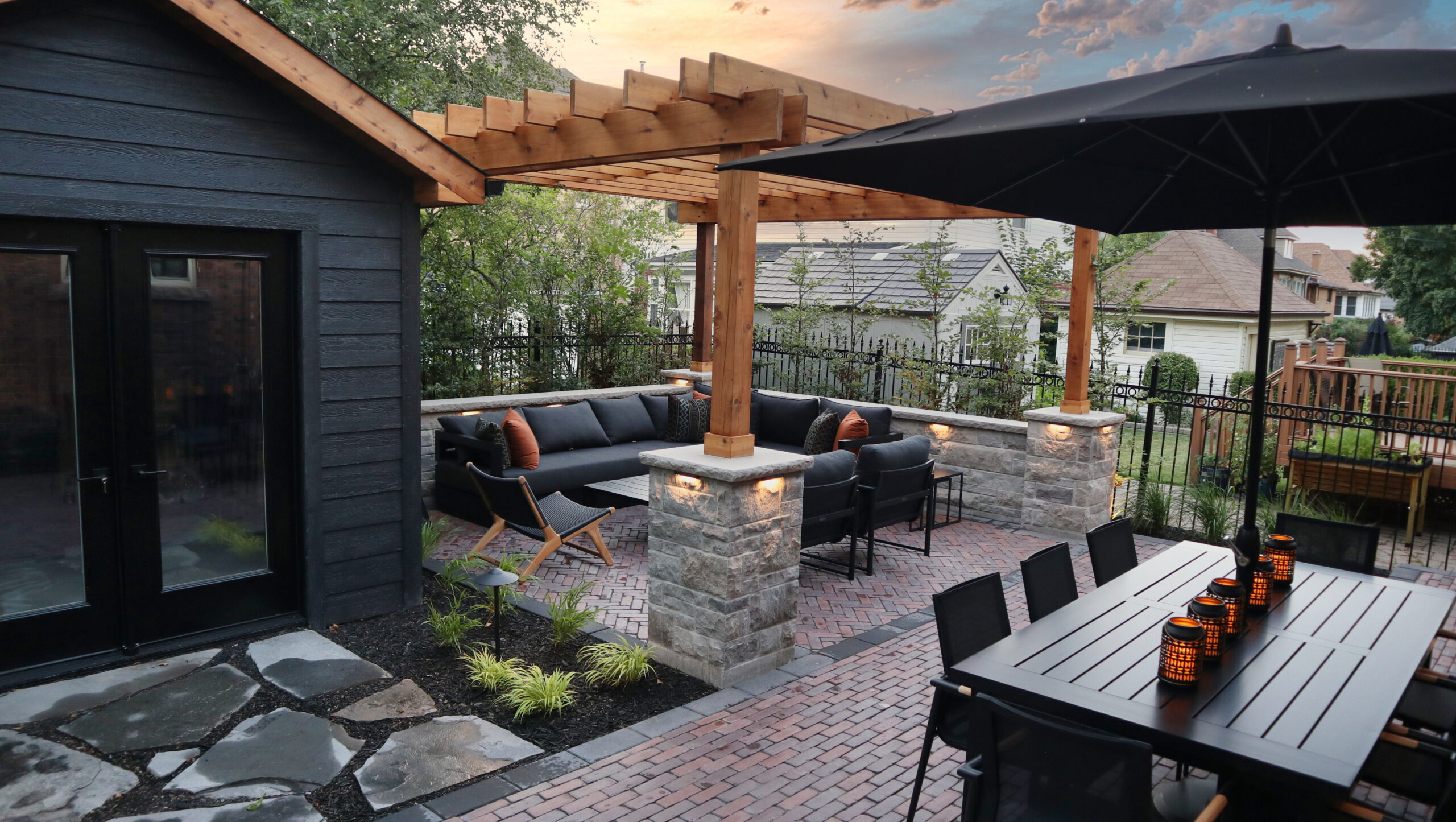
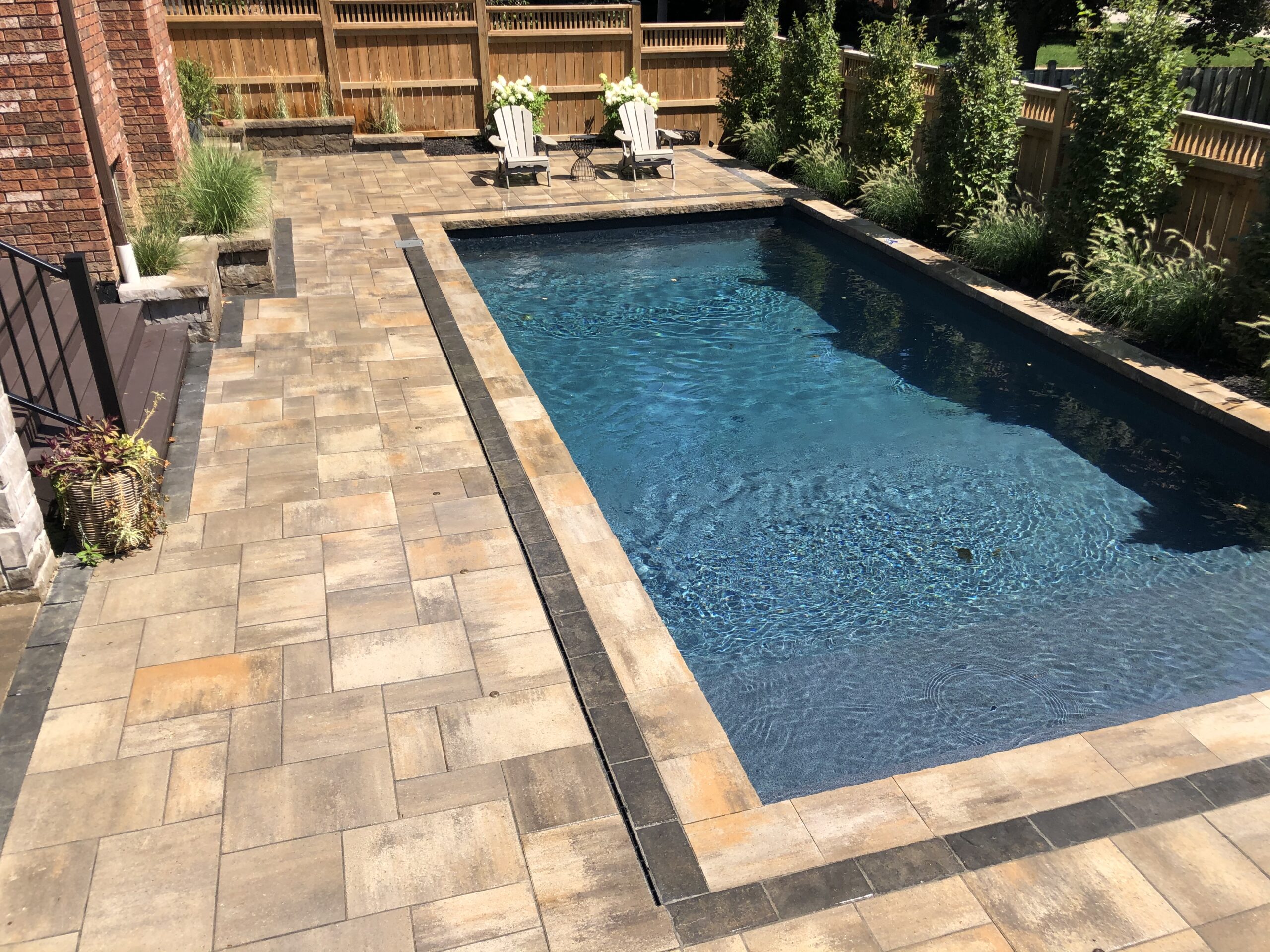
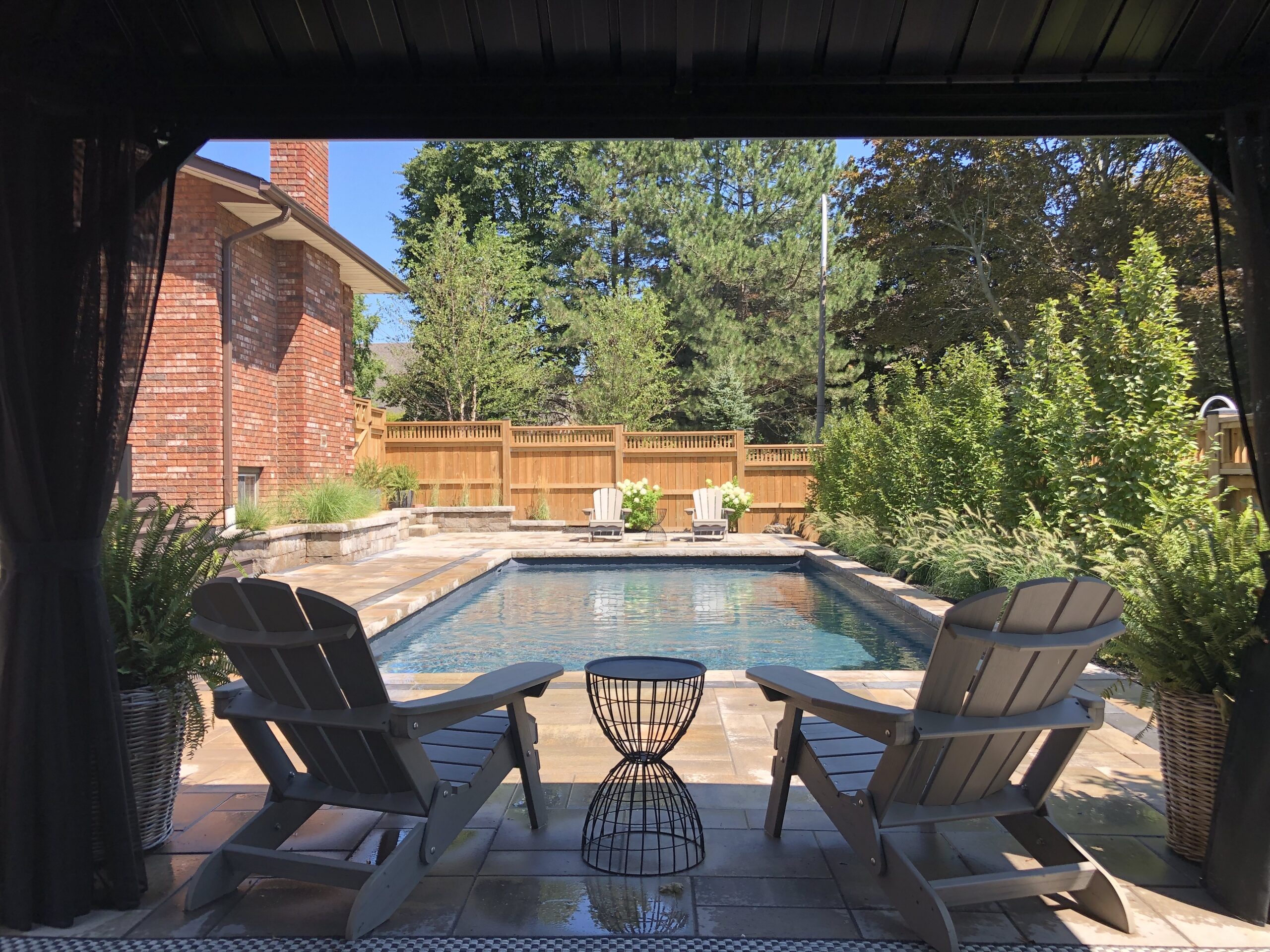
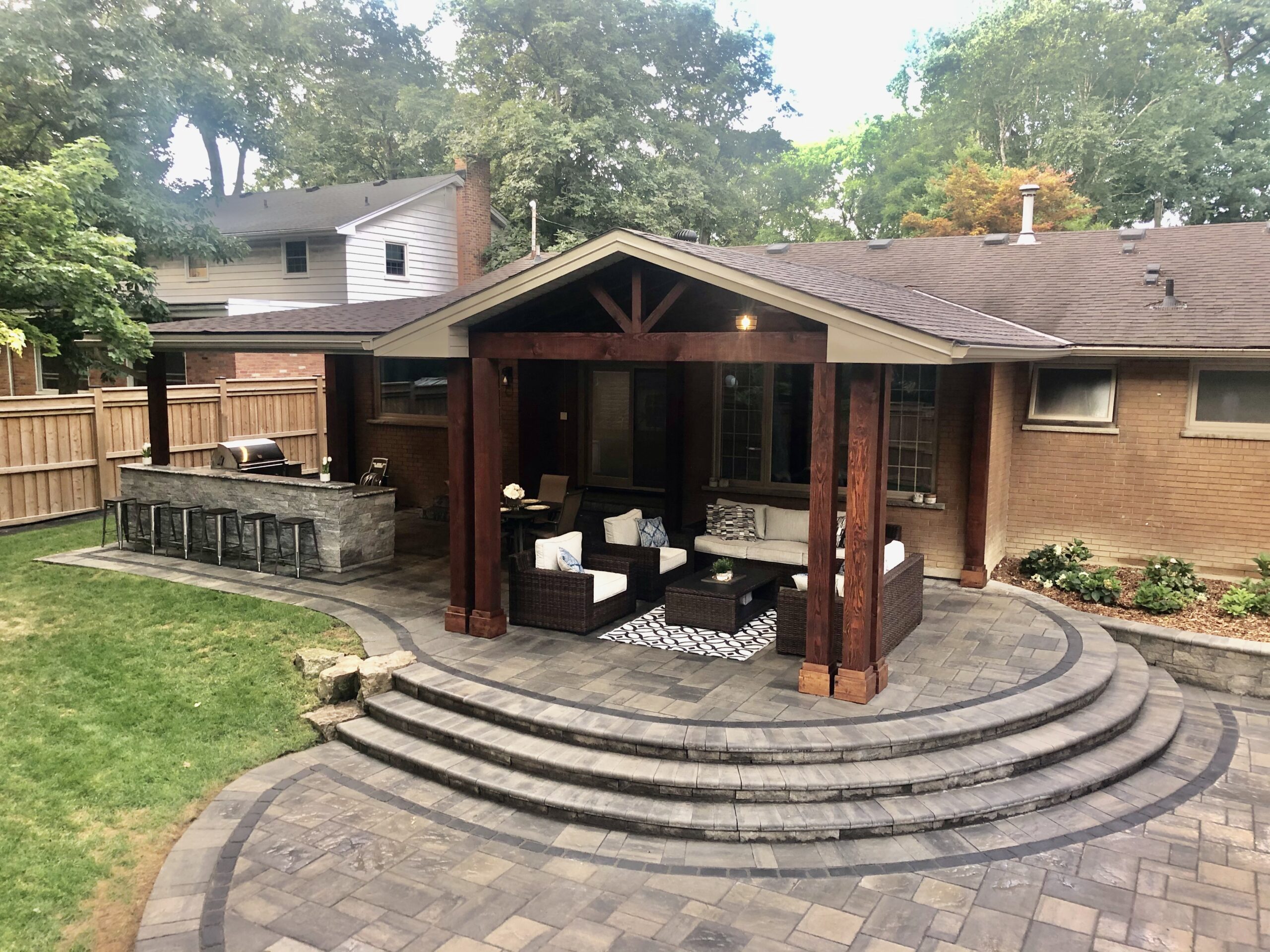
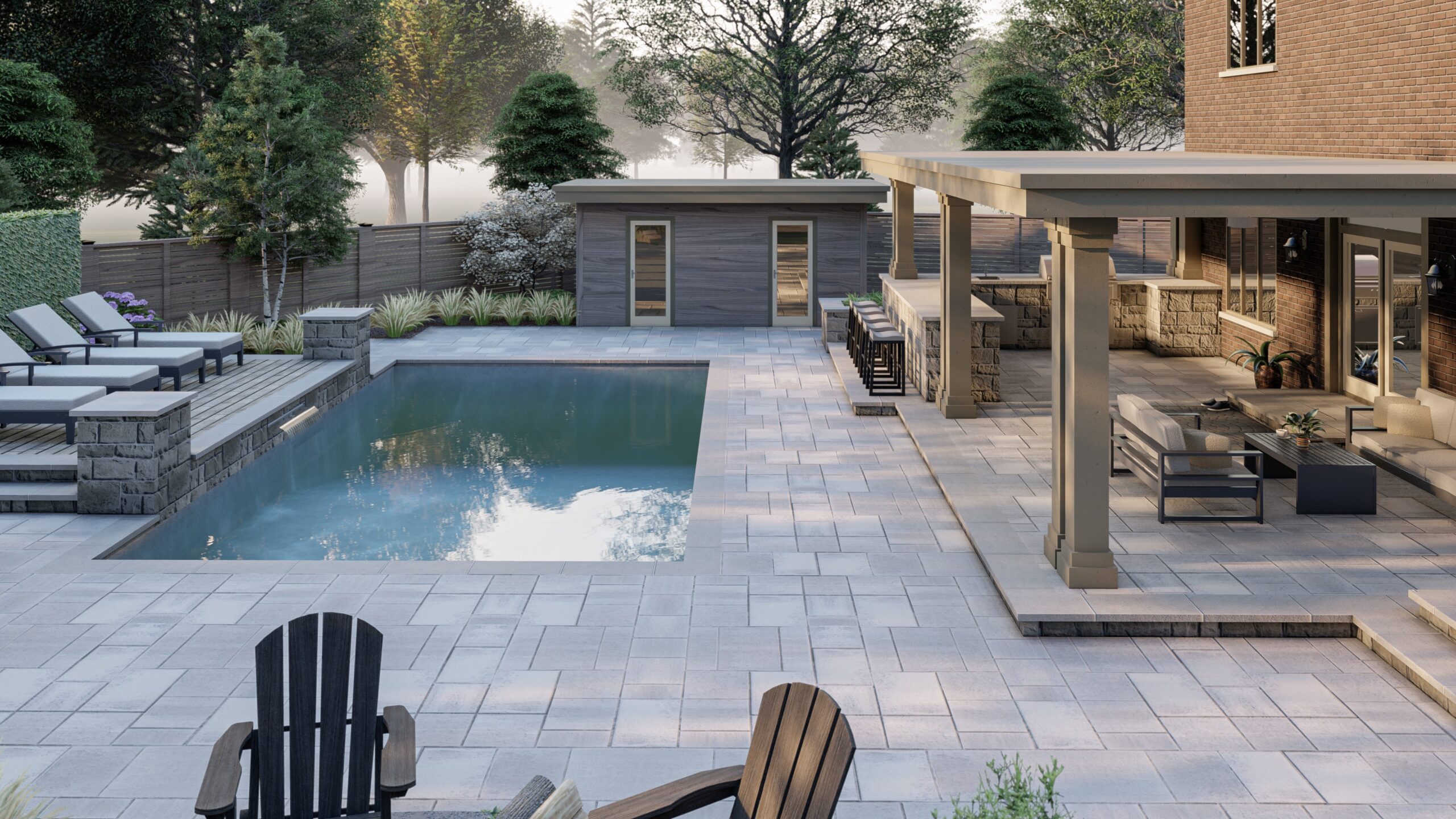
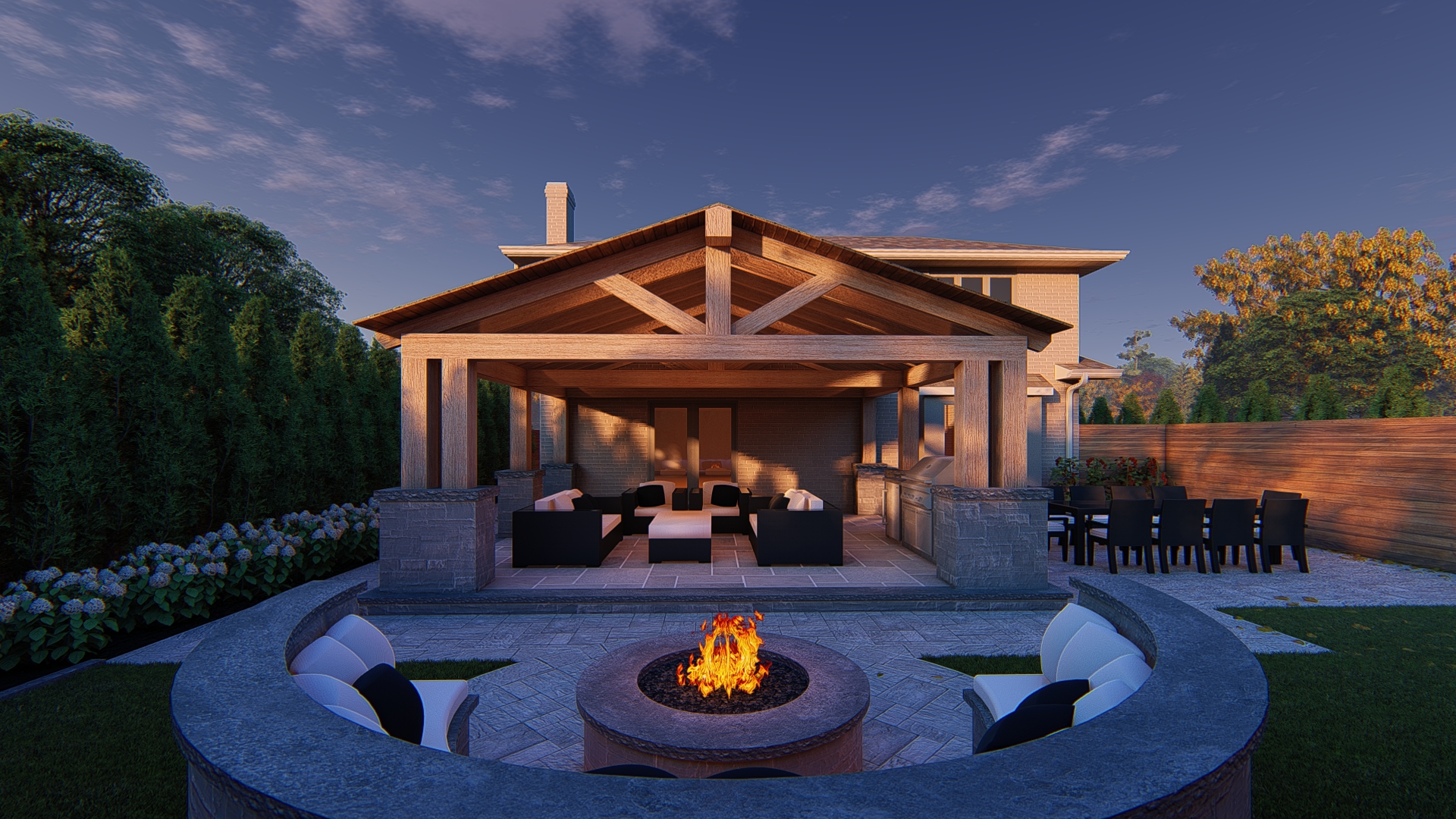
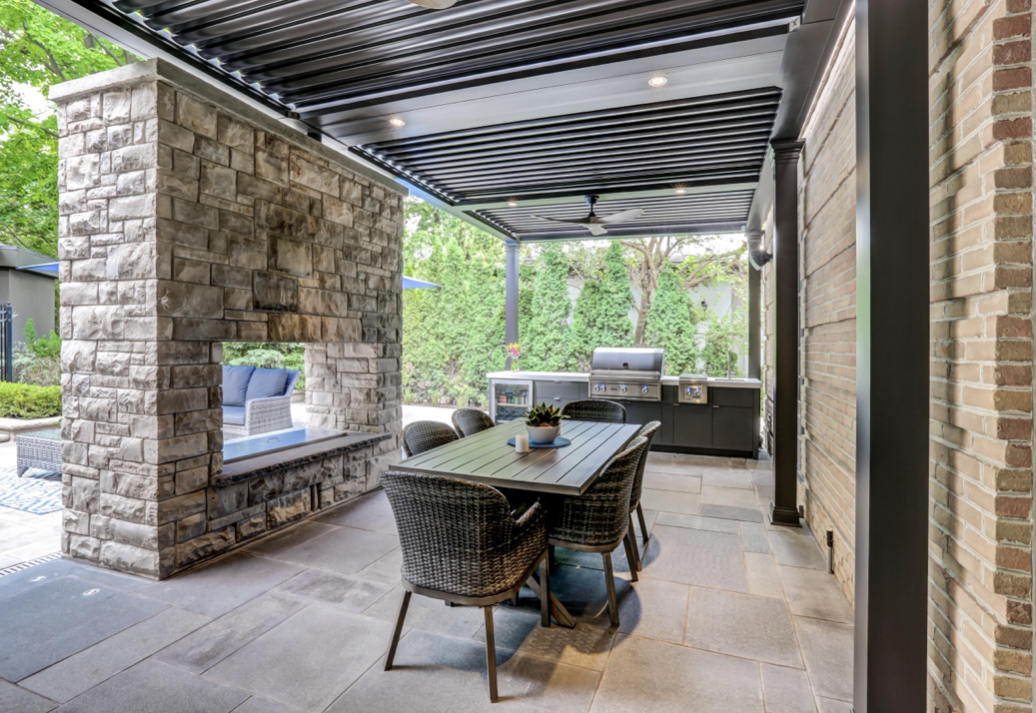
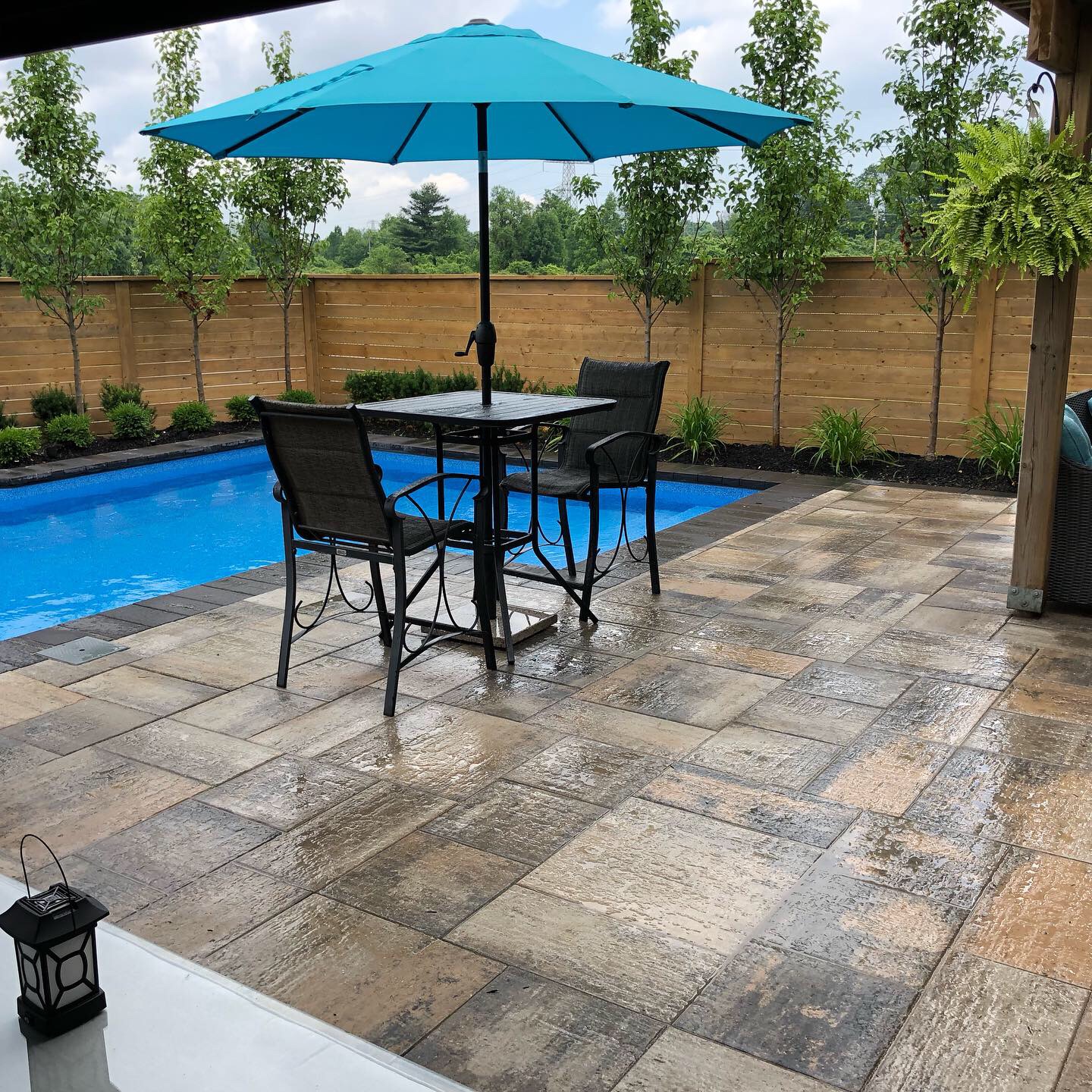
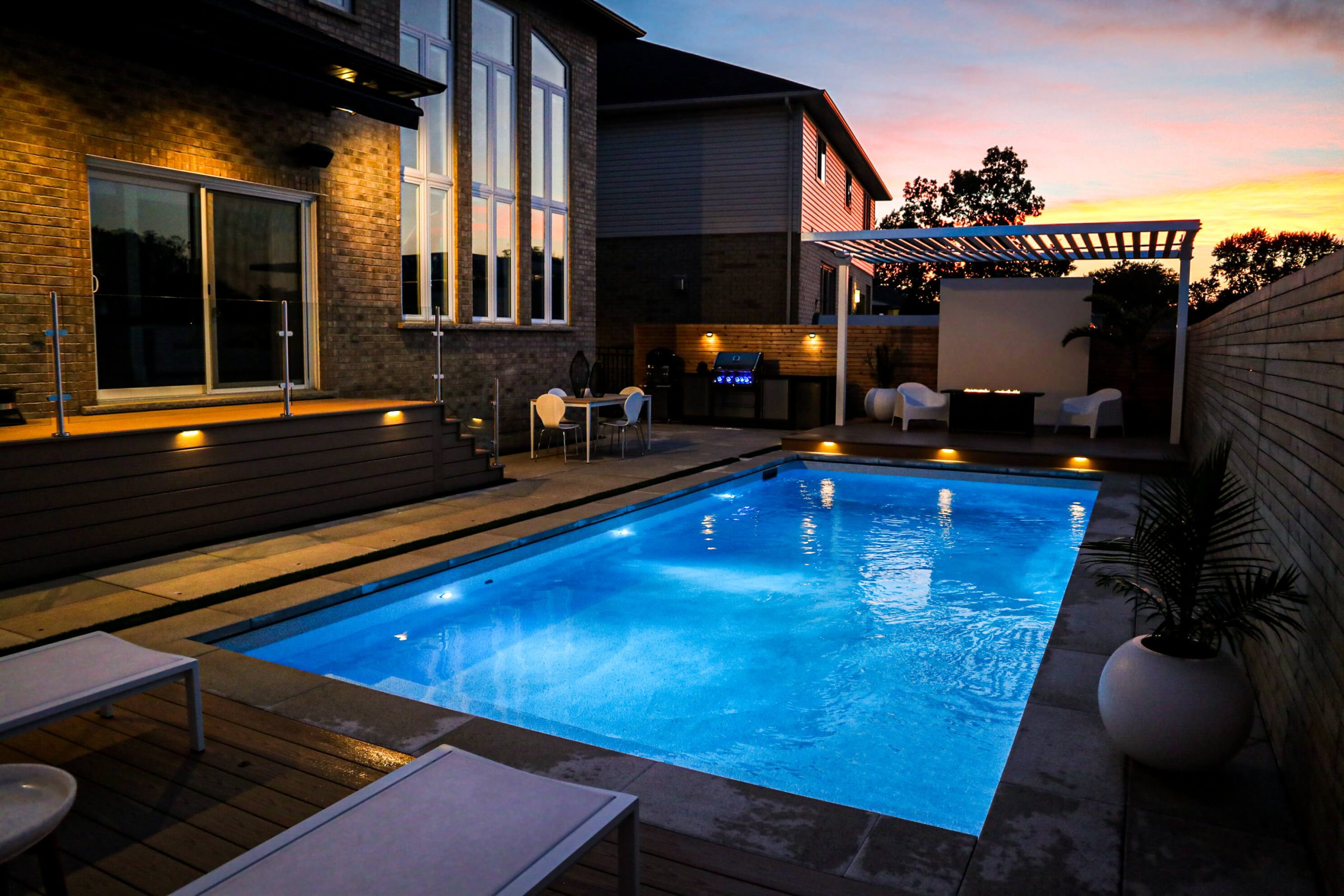
Lighting is essential for making outdoor spaces usable beyond daylight hours. Deck and patio lighting helps define seating areas, dining spaces, and gathering zones while maintaining a comfortable ambiance. Fixtures are often built into structures, railings, or nearby hardscape so the focus remains on the space itself, not the hardware.
This approach allows outdoor living areas to feel balanced and welcoming at night, whether the goal is casual entertaining or quiet evenings outdoors. Lighting levels are kept consistent with how the space is used, ensuring visibility where needed while preserving a relaxed atmosphere.
Highlighting Natural Features
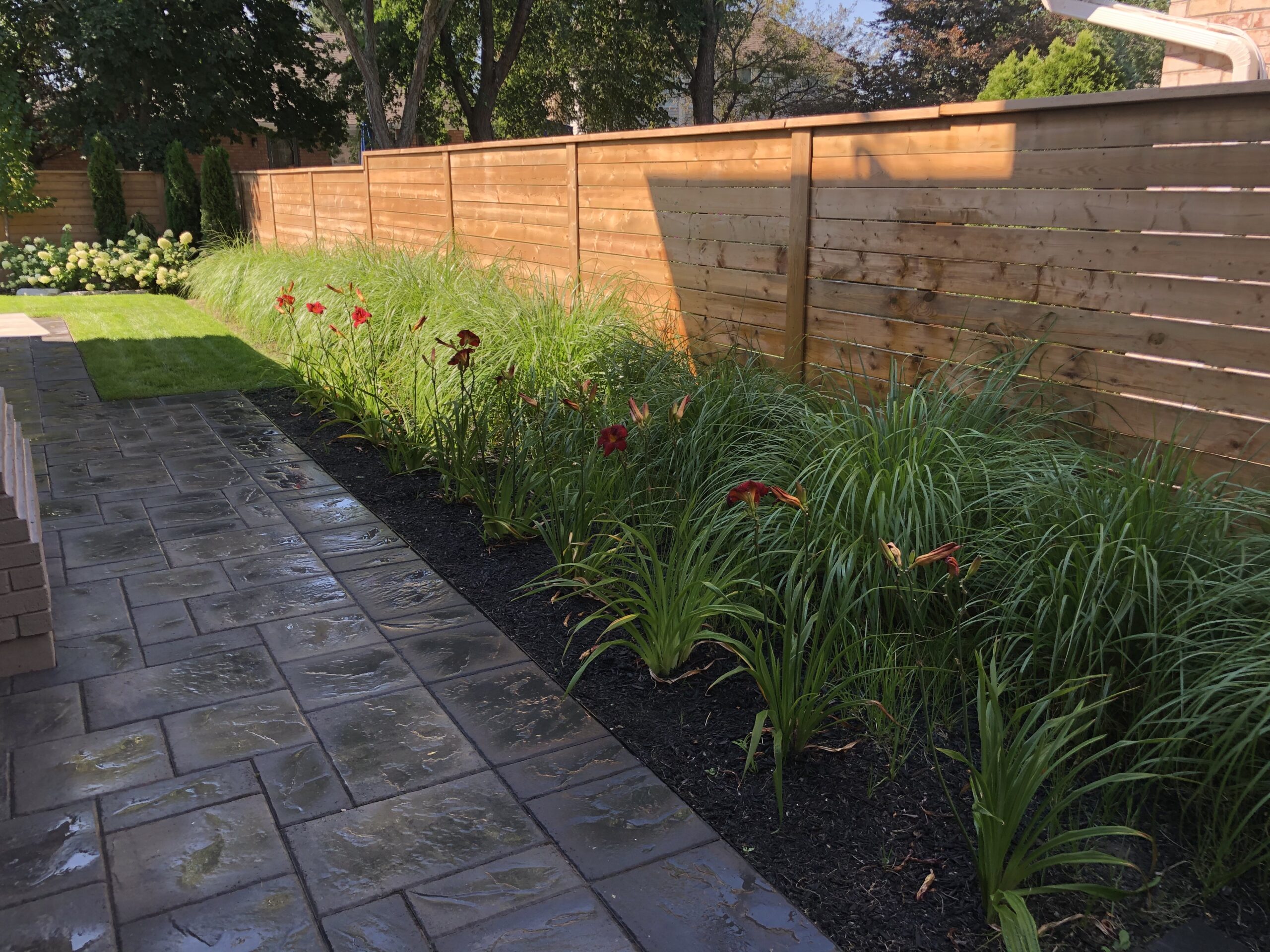
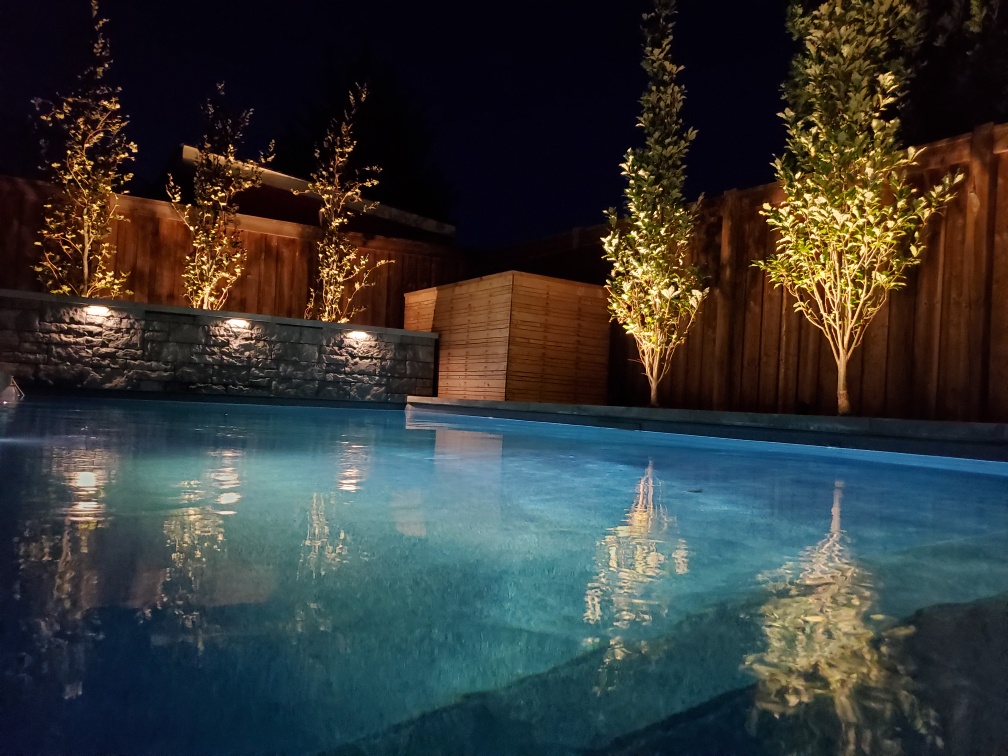
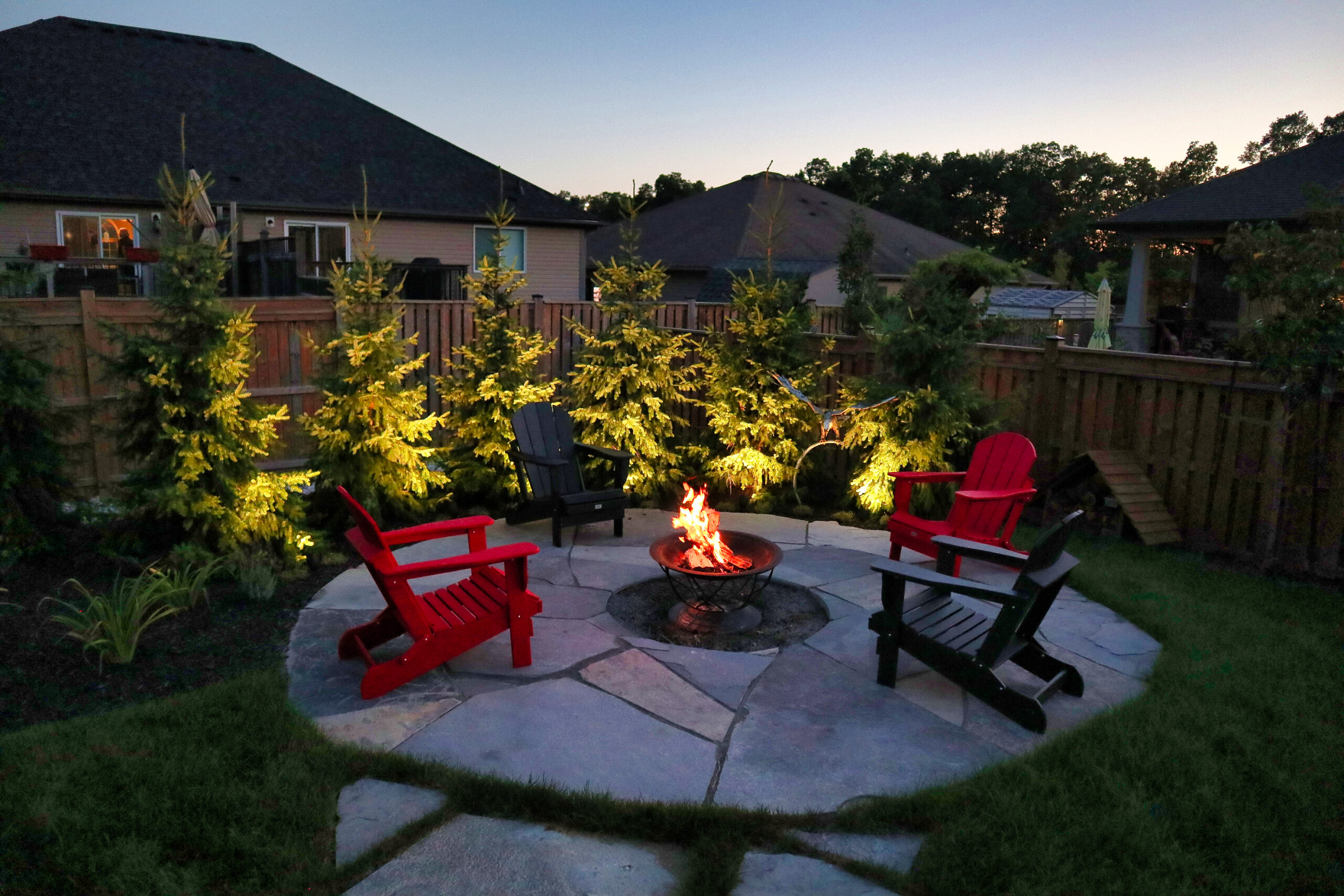
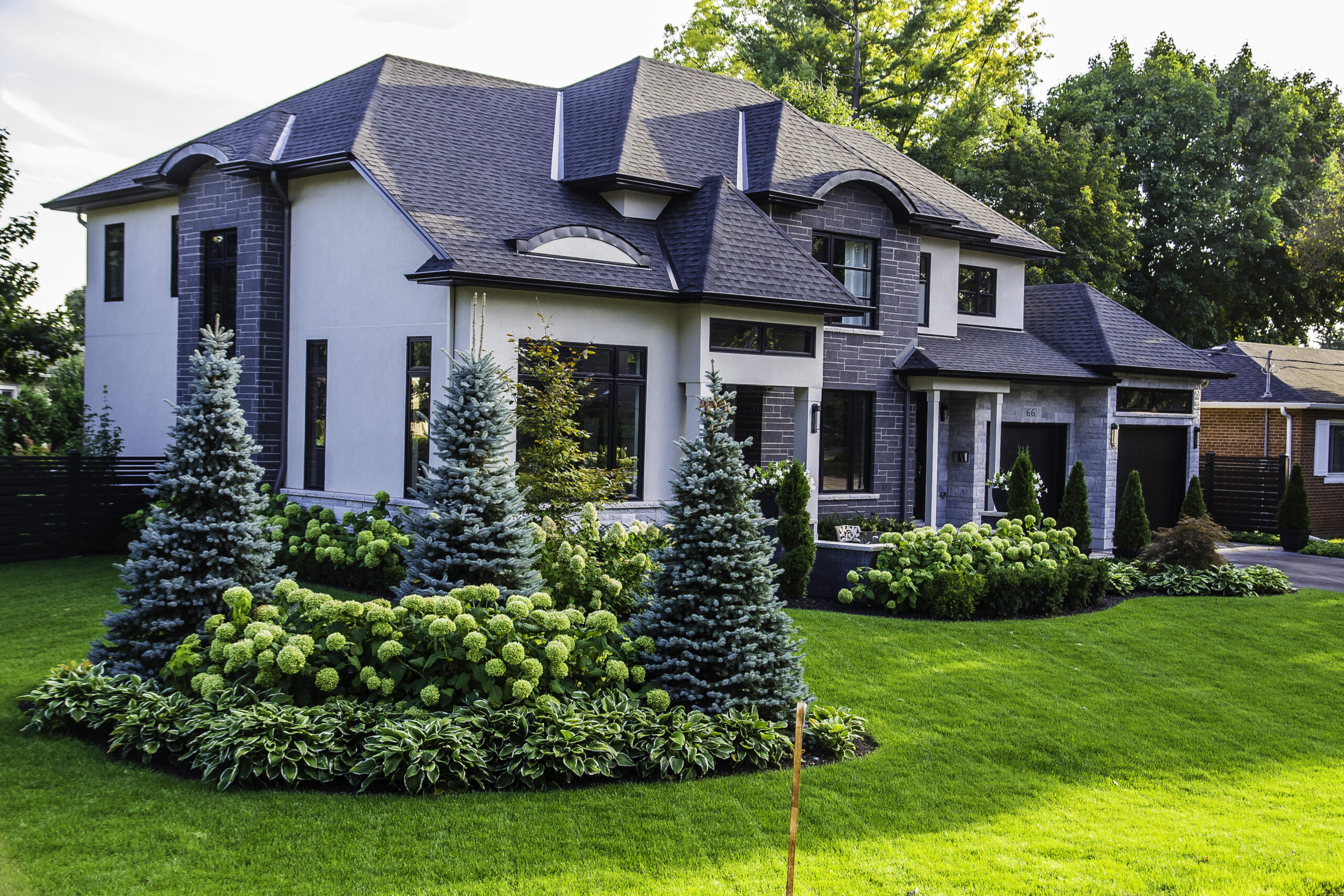
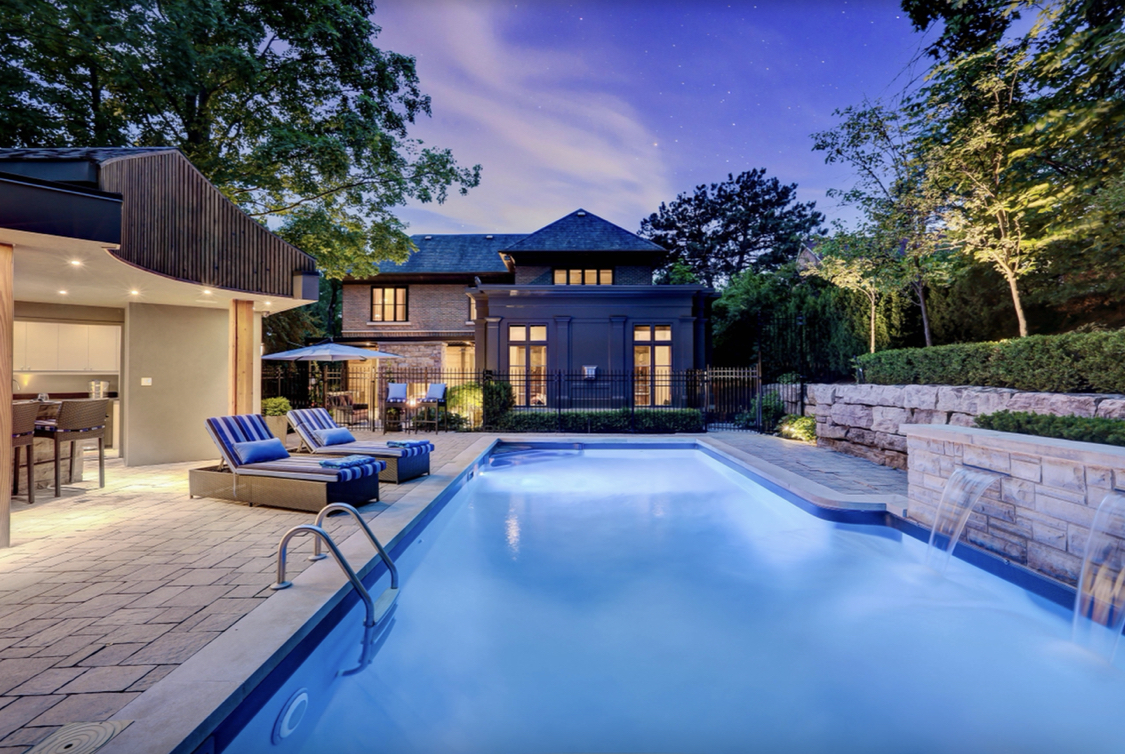
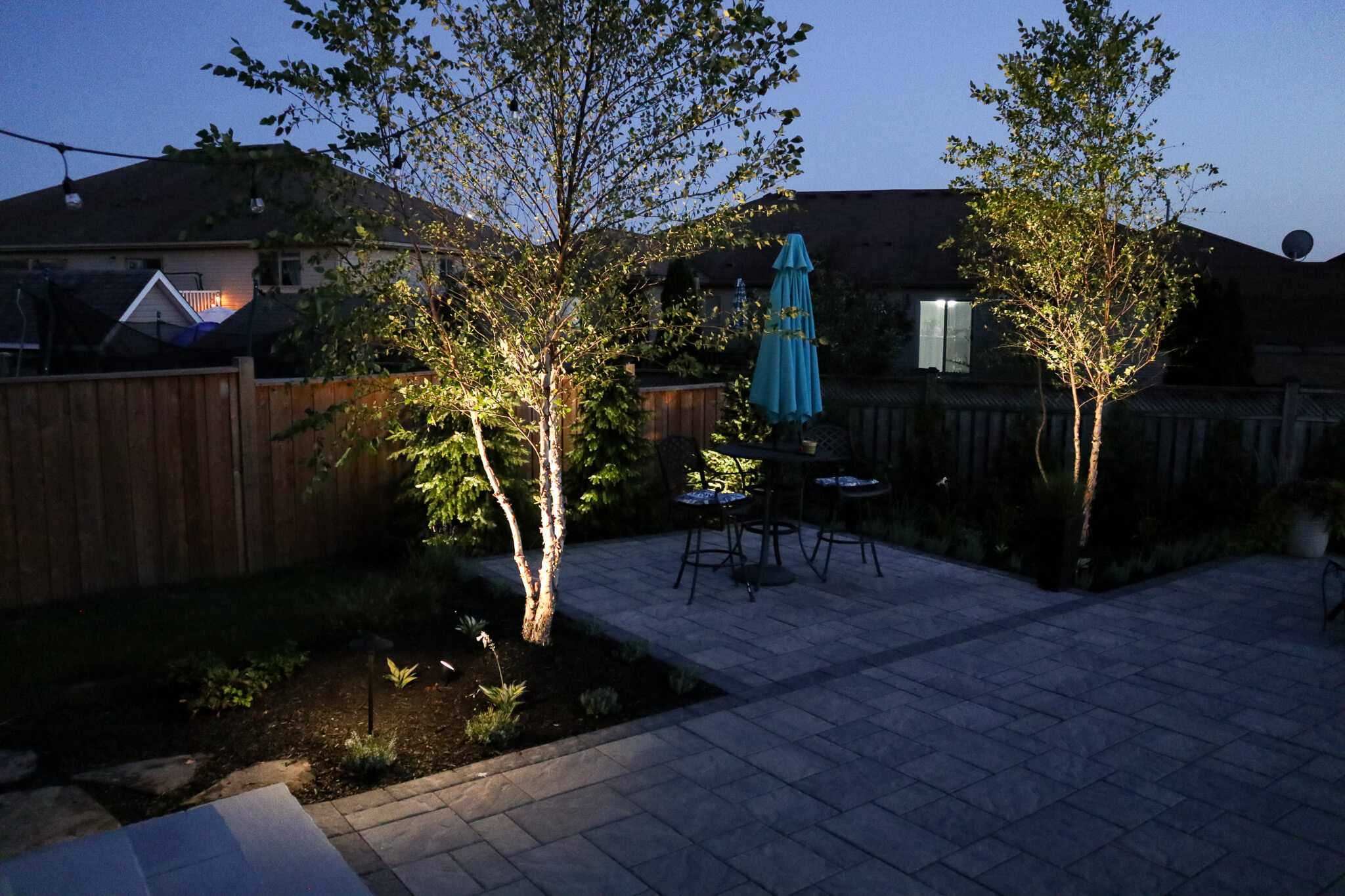
Tree and garden lighting adds depth and character after dark, revealing details that may go unnoticed during the day. Uplighting can be used to emphasize the structure of mature trees, while softer accent lighting brings attention to planting beds, textures, and seasonal interest.
Rather than flooding the landscape with light, selective illumination creates contrast and layers. This helps the landscape feel intentional and composed, even at night. Careful placement ensures plants are highlighted naturally, without fixtures becoming visible or distracting during the day.
Designing Lighting That Blends In
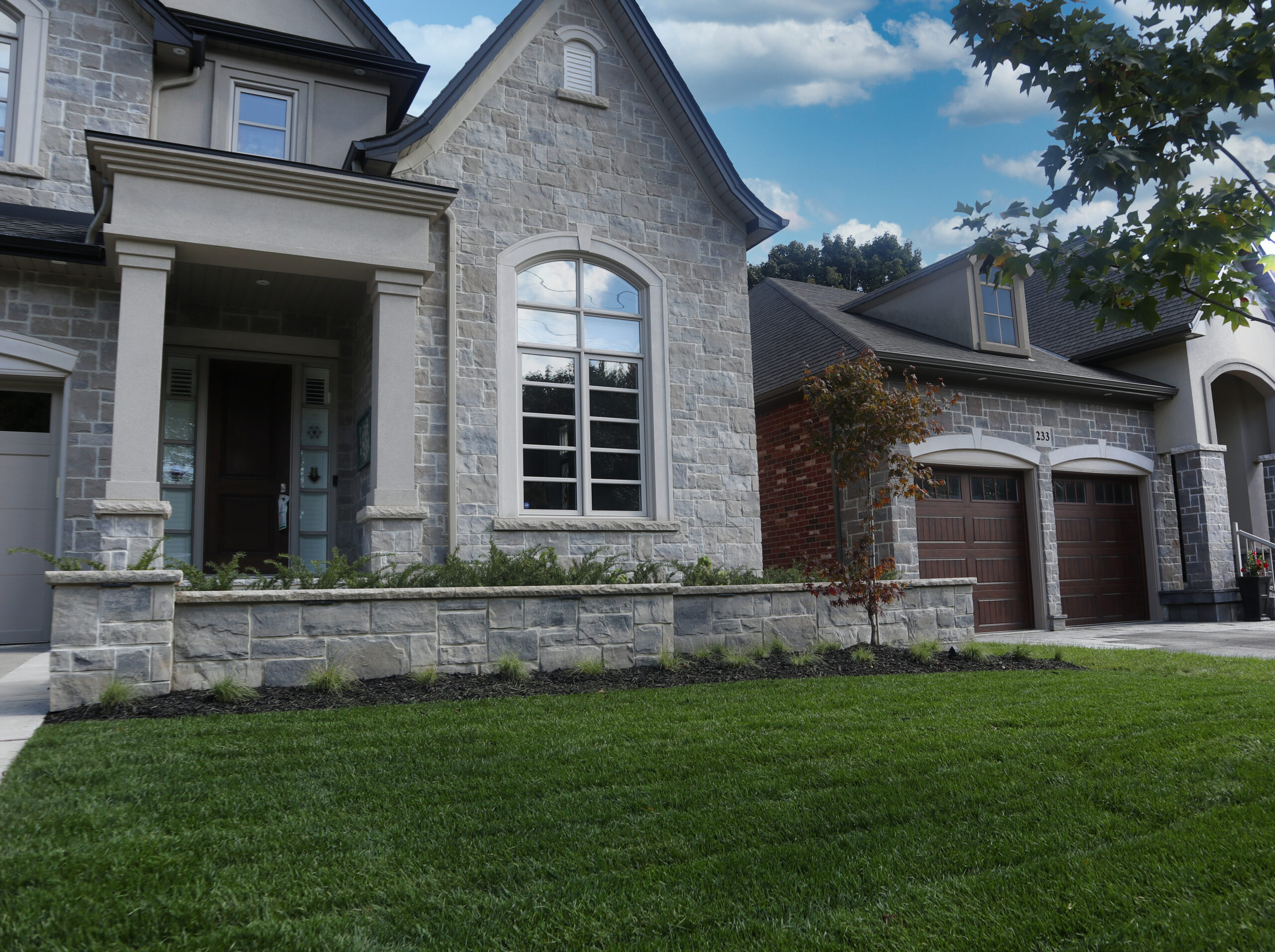
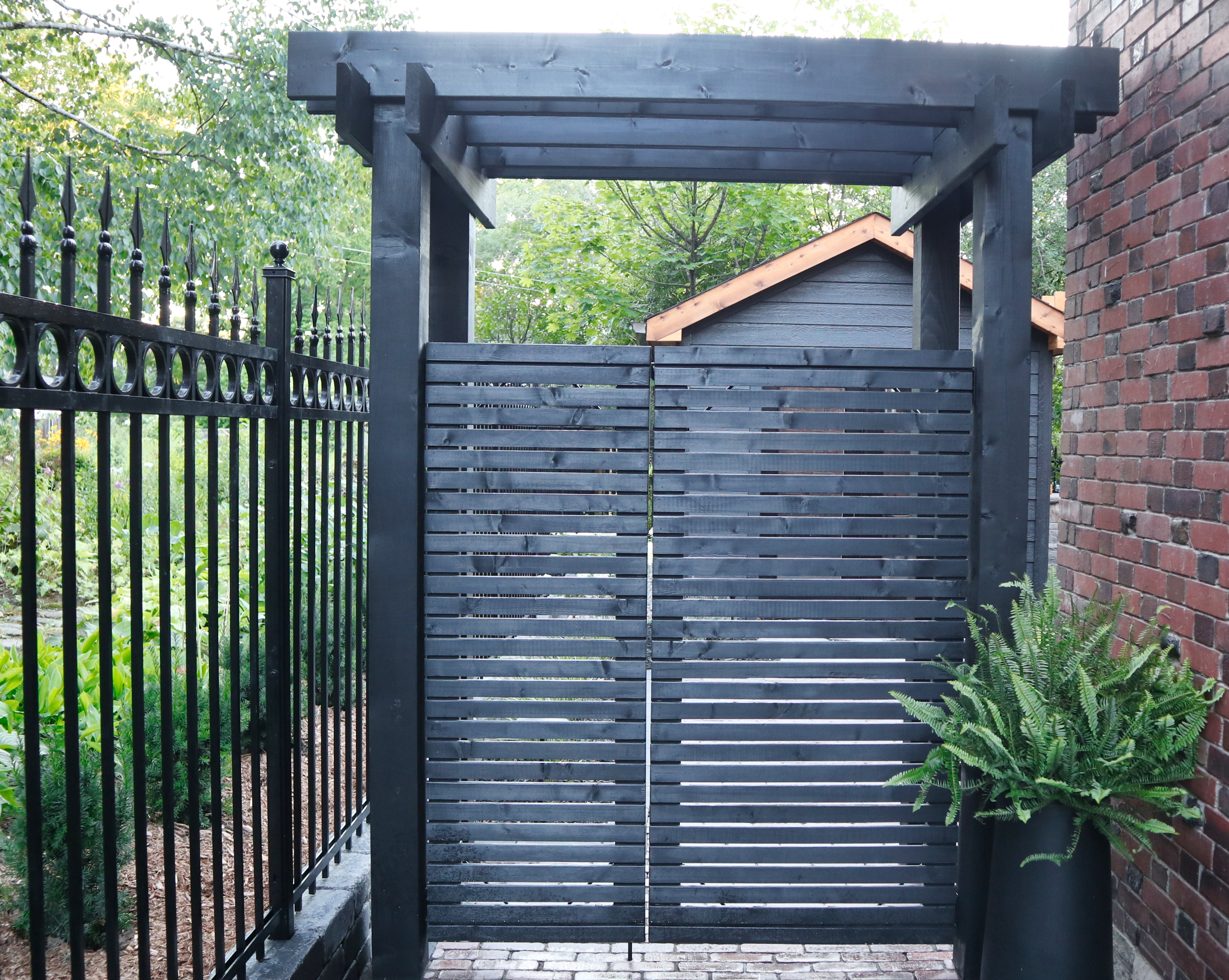
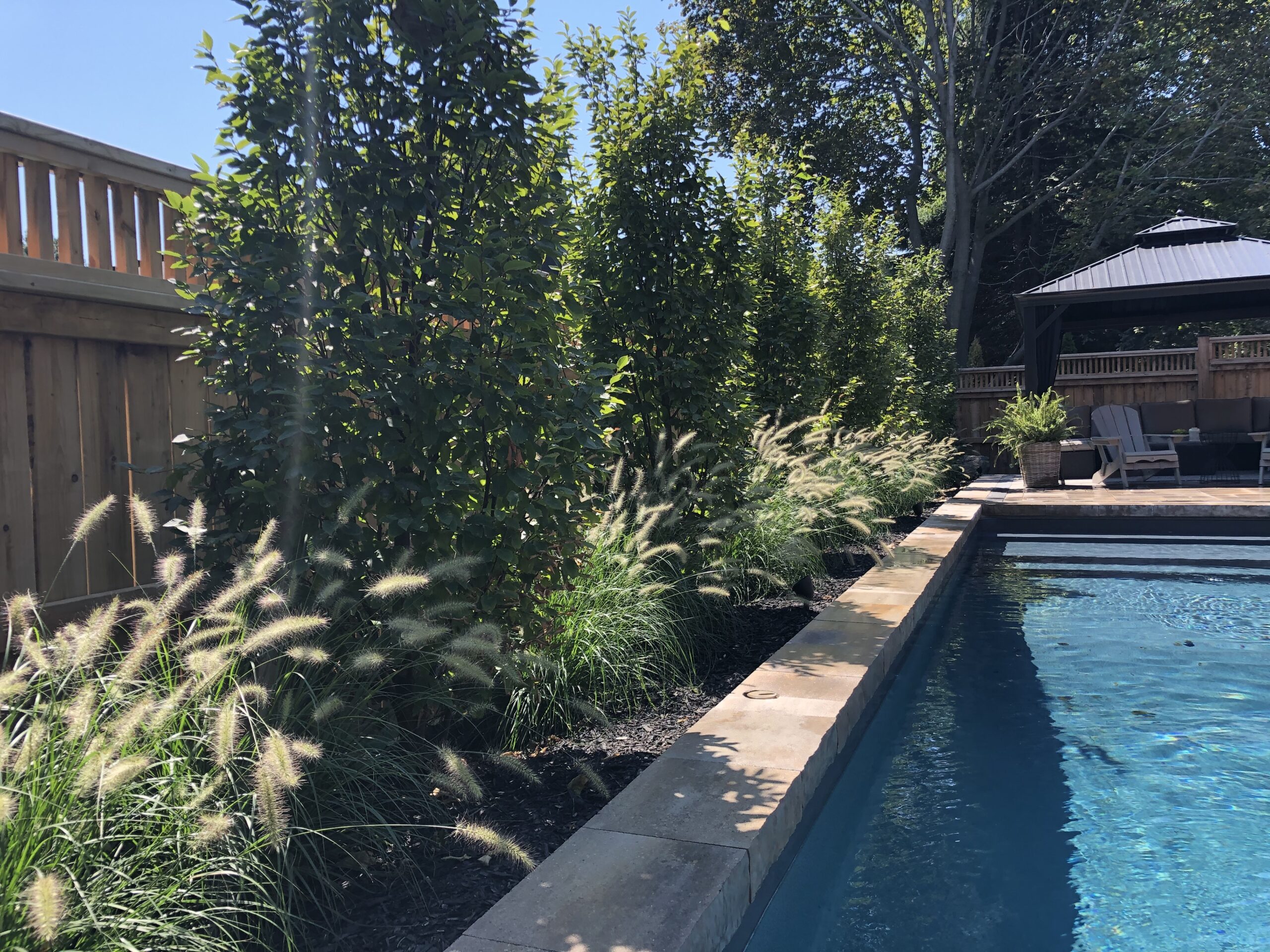
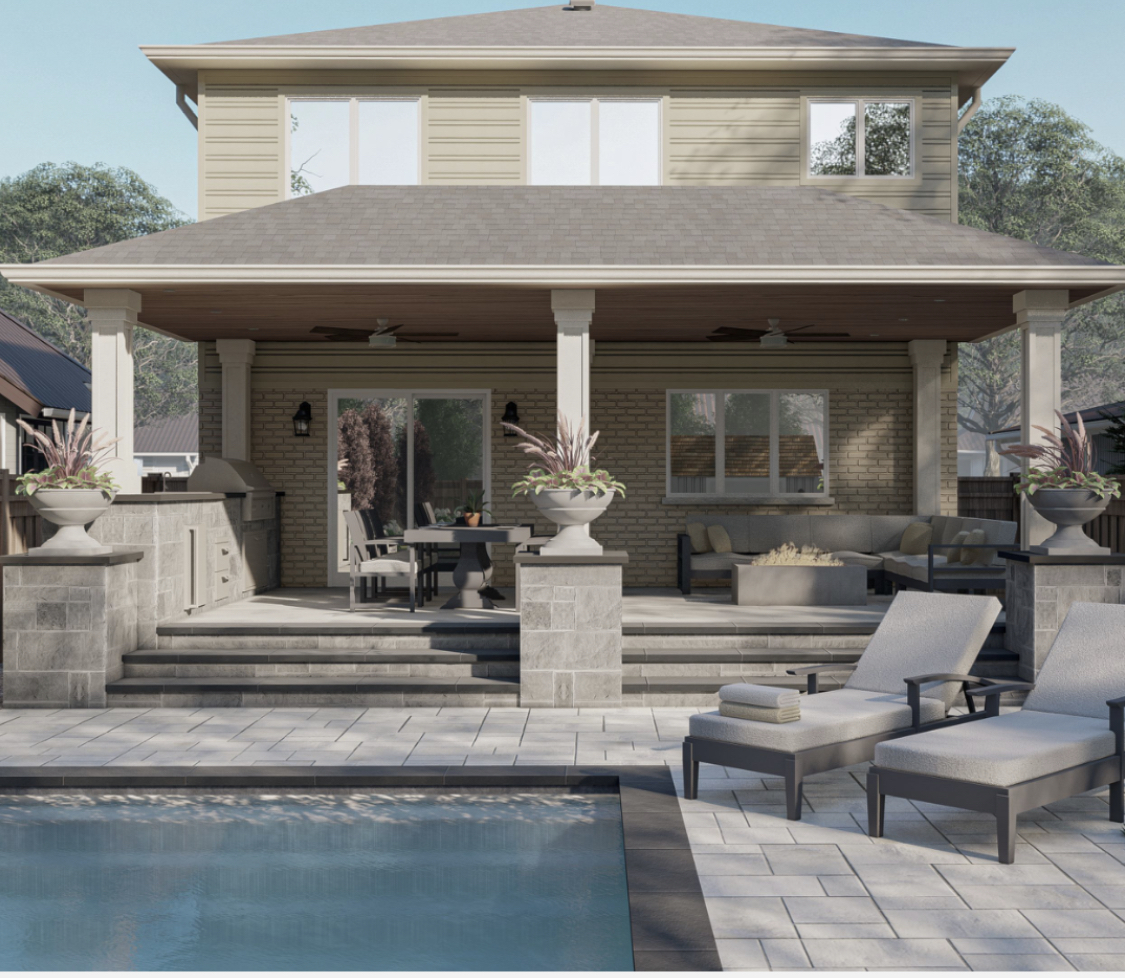
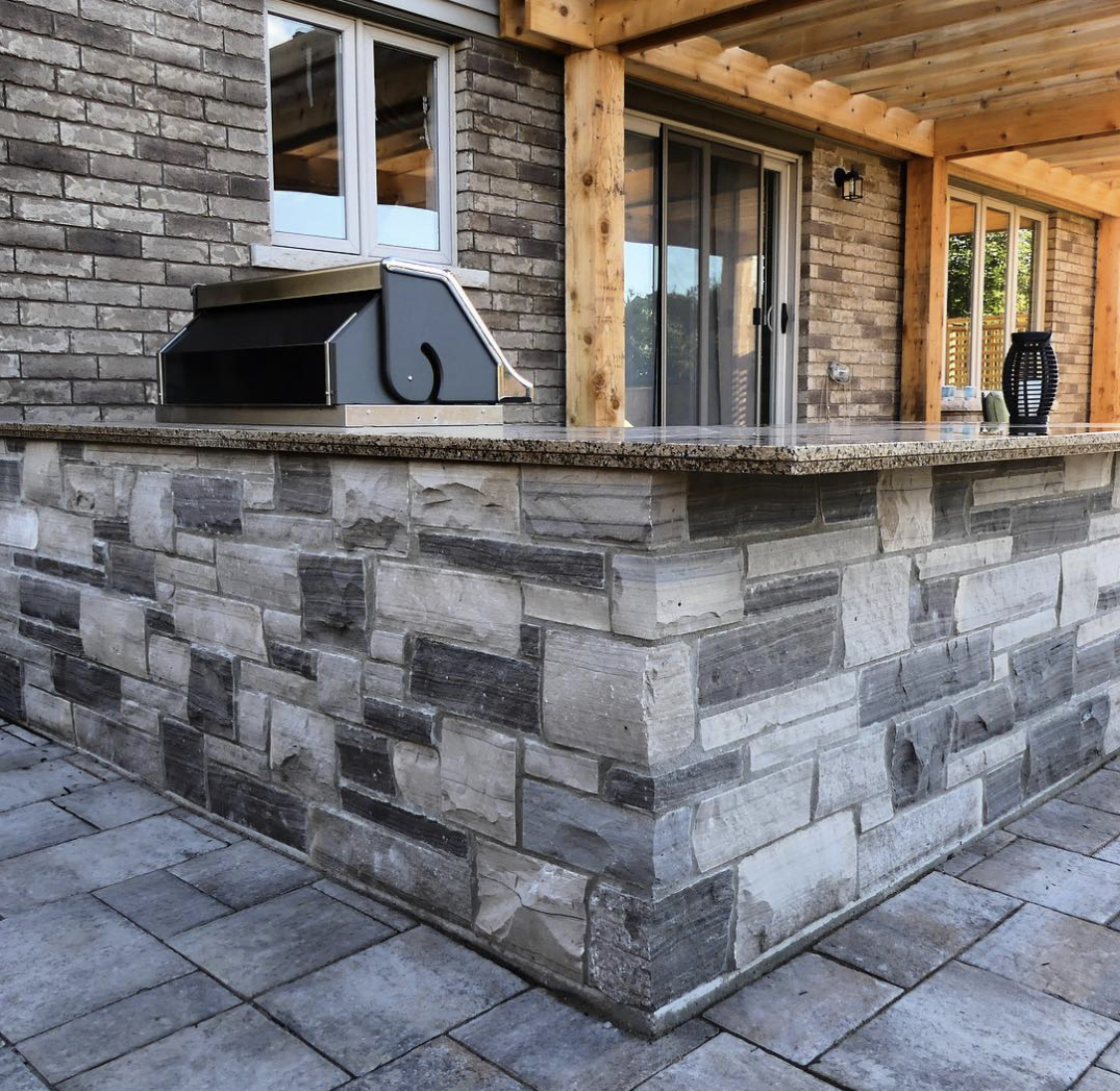
A successful lighting plan should feel like it belongs. Fixture selection, placement, and finish all matter when integrating lighting into a landscape. By matching materials and proportions to surrounding elements, lighting can blend seamlessly into stonework, planting, and architectural features.
This attention to detail ensures fixtures remain unobtrusive during daylight hours while performing effectively at night. The goal is always for the landscape to take focus, with lighting quietly supporting the design rather than competing with it.
A Thoughtful, Integrated Approach
Ambient lighting works best when it is considered early in the design process. By planning lighting alongside grading, hardscape, and planting, installations can be cleaner, more efficient, and better integrated. This results in fewer exposed components and a finished space that feels cohesive from every angle.
From pathways and steps to decks, trees, and gathering areas, well-designed lighting enhances how a landscape functions and feels after sunset. When done right, it allows outdoor spaces to be enjoyed longer, more safely, and with a sense of balance that carries through every detail.